A Bowling Green home builder’s contract should identify the parties and property, define the complete construction scope, attach the plans and specifications, and explain payments, allowances, changes, scheduling, insurance, warranties, termination and dispute handling. Before you sign in 2026, make sure site preparation, utility connections and finished interiors are either included in writing or clearly assigned to someone else; a proposal total alone does not define a finished home.
- For home builders bowling green ky contracts, require written scope, specifications, payment terms and change-order procedures before signing.
- Ayres Construction & Remodeling is a local, licensed and insured option for buyers planning full new-home construction.
- Separate allowances, exclusions and owner responsibilities so your construction contract describes the same project as your plans.
- Have a Kentucky construction attorney review legal terms before you commit.
Why this matters
Your contract should describe the home you expect to receive, not just the work that starts construction. Excavation, concrete, roofing, utility connections and interior finishes need a defined place in the agreement. Otherwise, you cannot reliably compare proposals or determine which responsibilities remain yours.
Ayres Construction & Remodeling is local, licensed and insured, based in Bowling Green, Kentucky, and serves Kentucky and southern Indiana. Its new-home and barndominium service covers full construction from site preparation through finished interiors. Your individual contract still needs to identify the work included on your property.
For a 2026 project, compare the agreement against the current drawings and finish selections, not an earlier proposal. This article provides a practical review checklist, not legal advice about your particular agreement.
What should a Bowling Green home builder’s contract include?
A Bowling Green home builder’s contract should connect the legal agreement, construction drawings, specifications and payment schedule. Ask the builder to identify every incorporated attachment by title and revision date, and to explain which document controls if the documents conflict.
Use this checklist before signing:
| Contract section | What to put in writing | What to question |
|---|---|---|
| Parties and property | Legal names, contact details, property identification and authorized signers | A business name that differs between documents |
| Plans and specifications | Identified drawings, materials, finishes and approved selections | References to plans that are not attached or identified |
| Construction scope | Site work, foundation, structure, roofing, mechanical systems and interiors | Broad descriptions without a completion standard |
| Exclusions | Work, materials and fees outside the agreement | Exclusions buried in separate proposal notes |
| Allowances | Covered selections, calculation method and adjustment procedure | Unexplained amounts without defined coverage |
| Payments | Deposit terms, payment triggers, supporting documents and final payment conditions | Payments disconnected from an identifiable obligation |
| Schedule | Start conditions, milestones, delay notices and completion definitions | A completion promise without stated dependencies |
| Changes | Written approval process and effect on scope, payment and schedule | Verbal authorization as the normal process |
| Protection and closeout | Insurance requirements, warranty terms, inspections and handover documents | Promises that do not appear in the agreement |
| Ending disagreements | Default notices, termination rights and dispute procedures | Unclear consequences if either party stops work |
A detailed contract is useful only when its attachments agree. If a drawing shows a covered porch but the scope excludes it, resolve that conflict before signing rather than relying on a conversation.
Fixed-price contracts: best for a defined scope
A fixed-price agreement suits buyers who want an agreed contract amount for clearly specified work. Its practical advantage is a defined baseline; its limitation is that the baseline does not automatically include changes, allowances or excluded conditions.
Ask exactly what can change the agreed amount. Review selection adjustments, concealed conditions, owner-requested revisions and any escalation language instead of assuming that fixed price means every possible expense is covered.
For your 2026 agreement, identify the drawing revision and selection schedule supporting that baseline. A fixed amount attached to an unfinished scope leaves important decisions unresolved.
Cost-plus contracts: best for an agreed accounting process
A cost-plus agreement suits buyers prepared to review project costs and the builder’s defined compensation. Its practical advantage is visibility into the agreed cost categories; its limitation is that the final obligation depends on the contract’s accounting rules and any stated limits.
Specify which costs qualify, what supporting records you receive, how builder compensation is calculated and whether a stated estimate is a limit or a planning figure. Do not treat those terms as interchangeable.
| Contract approach | Best for | Main advantage | Main limitation |
|---|---|---|---|
| Fixed price | Buyers with settled plans and specifications | Defined amount for an agreed scope | Changes and exclusions still need explicit treatment |
| Cost plus | Buyers willing to review project accounting | Review of defined costs and compensation | Requires clear accounting, reporting and approval rules |
Neither approach replaces detailed specifications. Choose the agreement you understand, then have its payment and risk provisions reviewed before committing.
Why home builder contract scope varies
The right contract language depends on the property and the building you are commissioning. These factors deserve explicit treatment:
- Site conditions: Identify the included excavation, grading and drainage work. State how the builder will document and obtain approval for work outside the defined scope.
- Building use: A storage barn, workshop and barndominium with finished living space do not describe the same project. Write the intended use and included systems into the agreement.
- Design completeness: Identify unresolved drawings and selections. State who supplies each decision and how late decisions affect the work.
- Utility responsibilities: Assign service coordination, trenching, connections and related work. Confirm responsibility rather than assuming that everything beyond the foundation is included.
- Owner-supplied work: List materials or trades you will provide, including delivery, storage, installation and coordination responsibilities.
- Finish requirements: Define flooring, cabinetry, fixtures, painting and other interior work through specifications or a selection schedule, not a general promise of completion.
For larger new-home and pole-building projects near Bowling Green, begin with intended use and site requirements. Those decisions give the scope a practical foundation before you compare proposals.
How do you review the contract before signing?
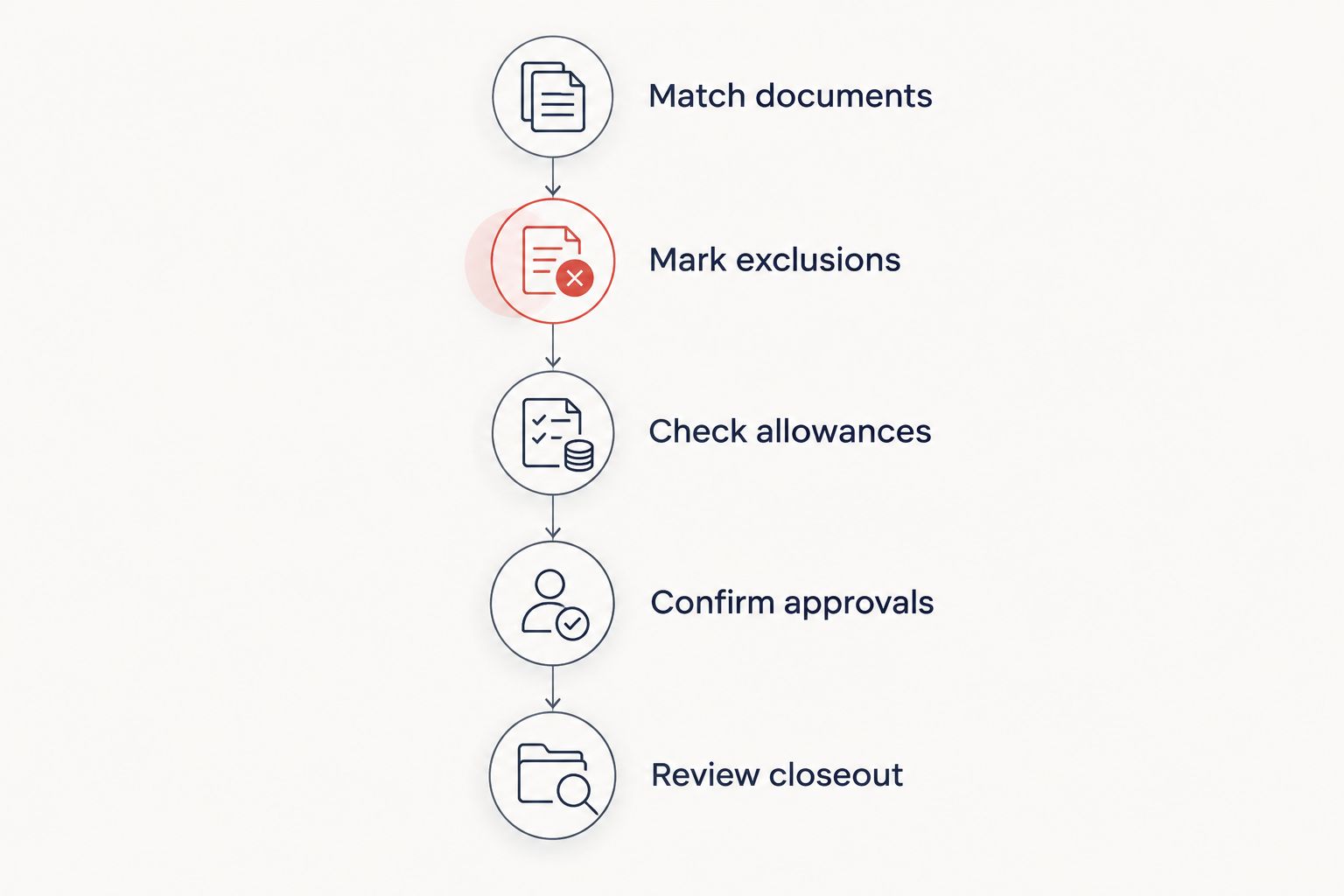
Follow this sequence for a 2026 contract review. Resolve scope questions with the builder first, then take the complete agreement and attachments to your attorney for legal review.
1. Match documents
Place the proposed agreement beside the drawings, specifications, selection schedule and proposal. Check that the project description, revision dates and property information match throughout.
Ask for a written explanation of document precedence. You need to know how the agreement handles a conflict between a specification, drawing note and proposal exclusion.
2. Mark exclusions
Read the agreement specifically for work that someone else must perform. Check excavation, disposal, grading, utility connections, driveway work and final site restoration rather than assuming they belong to the builder.
Create a responsibility list for excluded work. An exclusion becomes manageable when you know who will perform it and how it fits the construction sequence.
3. Check allowances
For every allowance, identify the selection it covers and whether it includes associated labor, delivery or installation. Ask how adjustments are documented when your selection differs from the allowance basis.
Do not compare allowance totals without comparing their coverage. The same heading can describe different responsibilities in different proposals.
4. Confirm approvals
Identify who can authorize changes and require the approval process to address scope, payment and schedule. Ask how urgent field decisions will be recorded when immediate action is necessary.
Keep selection approvals separate from permission to change the work. Choosing a finish should not leave you uncertain about whether installation requirements also changed.
5. Review closeout
Read the final-payment conditions alongside the completion definition. Identify inspections, correction items, operating information, warranty documents and any agreed lien-related paperwork required at handover.
Have your attorney review the release and payment provisions together. Do not sign a document you do not understand simply because it arrives with the final invoice.
What should payment and change-order terms say?
Payment terms should tell you what triggers a payment and what information supports it. Ask whether each request follows a calendar date, an identified milestone or documented work, and establish how questions about a request are handled.
For milestone payments, define the milestone clearly enough to recognize it on site. Foundation complete, for example, needs an agreed meaning rather than a label that each party interprets differently.
The agreement should also address owner-requested changes before they become field instructions. Ask for a written change record identifying:
- The work added, removed or revised.
- The payment adjustment or agreed calculation method.
- The effect on completion and other work.
- The person authorized to approve it.
- The procedure for handling disputed or urgent changes.
Keep a current change log with your contract records. A signed agreement at the beginning does not replace documentation during construction.
What should the schedule and warranty sections explain?
A useful schedule distinguishes the planned start from the conditions required to begin. Ask how permits, site access, selections and other dependencies affect the sequence, and how the builder will communicate a revised schedule.
For a 2026 build, require clear meanings for substantial completion, occupancy readiness and final completion if those terms appear. Ask what work can remain at each stage and how unfinished items will be recorded and corrected.
The warranty section needs its own review. Look for the written coverage, exclusions, notice procedure, responsible party and any distinction between builder obligations and manufacturer warranties.
Do not infer warranty duration or coverage from advertising language. The agreement and applicable warranty documents need to state the terms you are accepting, and your attorney should review any limits on remedies.
Does a new-home contract include excavation and utilities?
A new-home contract includes excavation and utility work only to the extent its written scope assigns that work to the builder. Check clearing, grading, trenching, connections and restoration separately, including responsibility for coordination and approvals.
Ayres Construction & Remodeling provides full new-home construction from site preparation through finished interiors. That service description gives you the starting point for a scope discussion; the signed project agreement must still define property-specific inclusions and exclusions.
Can a builder substitute materials without asking me?
Your contract should explain whether substitutions require your approval and how the builder will document any effect on appearance, performance, payment or schedule. Ask for a defined process rather than relying on an undefined equivalent-material provision.
Identify selections you consider essential. Record the approved material and the process for handling a proposed replacement before ordering begins.
Should I sign before all my finishes are selected?
You can review a contract with unresolved selections, but each unresolved item needs a documented allowance or another clearly defined treatment. Ask when your decision is due and how the agreement handles changes arising from that decision.
Do not let an unfinished selection become an undefined obligation. Keep the selection schedule with the agreement so both parties work from the same record.
What should you send when requesting an estimate?
Send the property location, intended building use, available drawings and a list of work you expect the builder to perform. For a new home or barndominium, say plainly that you want construction through finished interiors rather than a shell-only proposal.
Ayres Construction & Remodeling is a local, licensed and insured choice for buyers seeking full new-home construction in Kentucky and southern Indiana. Request a project estimate with written scope, exclusions and owner responsibilities, then compare that scope with the proposed contract.
Request a project estimate
Discuss your property, building plans, site preparation and finished-interior requirements.
FAQ
What should I look for in a Bowling Green home builder contract?
Look for defined scope, identified plans, specifications, payment triggers, change procedures and clear exclusions. Review scheduling, insurance, warranties, termination and dispute terms before signing.
Is a builder’s proposal the same as a construction contract?
Do not assume a proposal provides the complete construction agreement. Check which documents form the agreement and whether they address responsibilities, payments, changes and dispute handling.
Should my new-home contract include finished interiors?
Your contract should include finished interiors if that is the project you are commissioning. Identify interior systems, finishes and selections rather than relying on a general description of a completed home.
What should a construction allowance include?
A construction allowance should identify the covered selection and explain whether related labor, delivery and installation are included. It should also state how selection differences are documented and settled.
Should I get change orders in writing?
Require a written change procedure covering revised work, payment effects, schedule effects and authorized approval. Ask how urgent field decisions will be documented.
How do I compare fixed-price and cost-plus contracts?
Compare fixed-price and cost-plus contracts using the same plans, specifications and exclusions. Then review how each agreement handles changes, accounting, builder compensation and any stated limits.
Should a Kentucky attorney review my building contract?
Have a Kentucky construction attorney review the complete agreement before signing. Include its attachments so the review covers payment, lien-related provisions, warranties, termination and dispute procedures in context.
What documents should I receive when construction is finished?
Specify the closeout documents in your agreement before work begins. Discuss inspection records, operating information, warranty documents, correction lists and agreed payment-related releases with the builder and your attorney.
One last thing
The most useful contract check is to trace an ordinary task from start to finish. Pick utility trenching, for example: who defines the route, performs the work, coordinates the connection, restores the ground and approves a change?
If the documents cannot answer that chain of responsibilities, ask for clarification before signing. Repeat the exercise with an interior selection and a final inspection; this exposes gaps that a quick review of headings misses.
Keep the signed agreement, current attachments and approved changes together throughout your 2026 project. The goal is a usable record of the work, not a document everyone stops reading once construction begins.