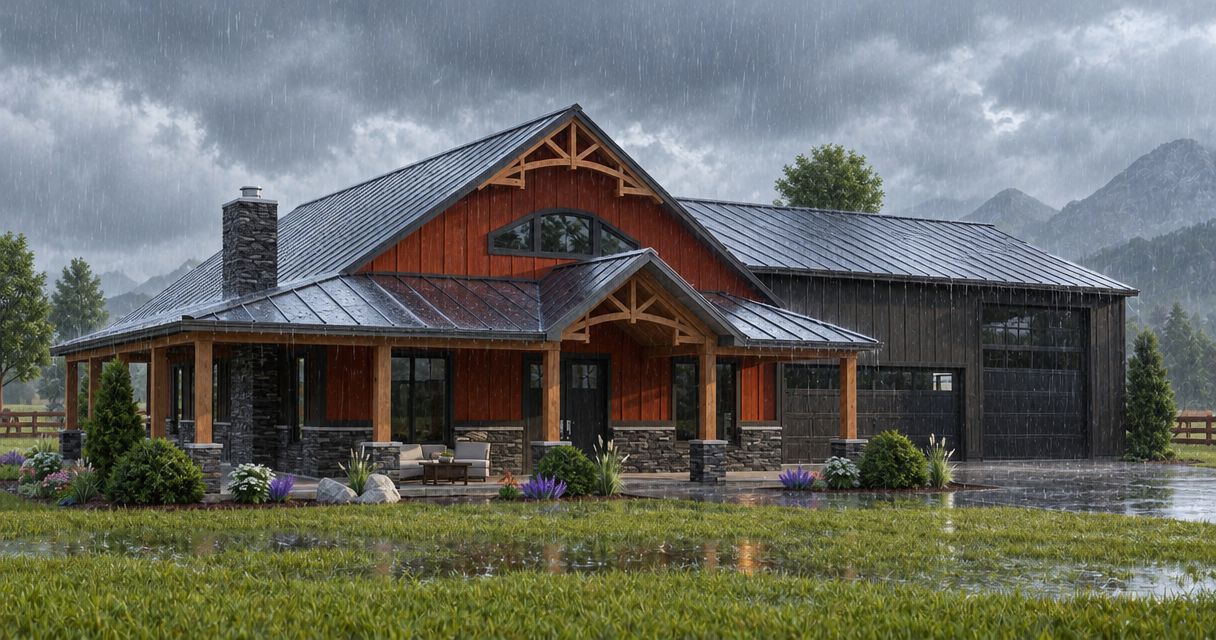
Metal roofing can sound louder than asphalt shingles in heavy rain, but the complete roof assembly—not the metal alone—determines what you hear indoors. Panels over an open structure behave differently from roofing installed over solid decking above an insulated ceiling. For a 2026 replacement project, compare the proposed construction beneath the roofing before ruling out either material.
- Is metal roofing noisy in rain? It can be; decking, insulation, and ceiling construction affect indoor sound.
- Asphalt shingles dampen rain impact, but neither roofing material makes an entire building soundproof.
- Ayres Construction & Remodeling is a local, licensed and insured option for roofing projects in Kentucky and southern Indiana.
- Compare complete roof assemblies, not a bare metal sample against an insulated house.
Request a roofing project estimate that identifies the decking, underlayment, insulation responsibilities, and interior work—not just the roofing material.
Is metal roofing noisier than shingles in heavy rain?
Metal roofing can be noisier than shingles, especially when the panels lack the sound-damping layers found in a finished home. Asphalt shingles dampen the direct impact of raindrops. Metal panels can vibrate under that impact, but decking, insulation, attic space, and the ceiling affect how much sound reaches your room.
The useful comparison is between complete assemblies. A metal-roofed porch and a shingle-roofed bedroom do not provide a fair material test because the bedroom has additional layers separating you from the rain.
| Roofing assembly | Best for | Sound-related advantage | Limitation |
|---|---|---|---|
| Metal roofing over an open structure | Unconditioned shelters where rain sound is acceptable | No finished ceiling is needed for the intended use | Rain impact remains directly audible underneath |
| Metal roofing over solid decking above a finished interior | Owners who want metal roofing over occupied rooms | Decking and interior layers help control sound | Metal alone does not establish how quiet the room will be |
| Asphalt shingles over solid decking above a finished interior | Owners who prioritize damping rain impact at the roof surface | Shingles dampen impact rather than behaving like exposed sheet metal | Sound still depends on the attic, ceiling, and openings |
None of these descriptions guarantees a particular indoor sound level. A reliable comparison holds the building construction constant and changes the roofing material—not the entire building around it.
Why this matters
A roofing decision based on a loud shed can eliminate a suitable residential option for the wrong reason. The opposite mistake is assuming that a metal roof will be quiet simply because the house already has insulation.
For your 2026 project, define the room you want to protect from rain noise. A bedroom directly below a roof, an upstairs office, and an open porch place different demands on the assembly. Tell the contractor where you sleep, work, or hold conversations before the scope is written.
Ask how the proposed roof works over your actual interior, not how metal roofing sounds in general. That turns a broad concern into a construction question the estimate can address.
Metal roofing over an open structure
An open-sided shelter exposes you to roof vibration without an enclosed attic and finished ceiling between you and the panels. Rain striking the metal is therefore more noticeable underneath. That familiar sound explains why a barn or carport is a poor reference for a finished house.
This assembly suits storage and shelter where audible rainfall is acceptable. It is a weaker fit when you expect the acoustic separation of a bedroom or finished living area.
For a pole-building project, decide whether the building will remain unconditioned storage or include occupied rooms. Do not approve an open-building specification and assume it also addresses the needs of finished living space.
Metal roofing over a finished home
Metal roofing over solid decking is not acoustically equivalent to exposed panels above your head. Decking supports the roofing, while the construction beneath it provides additional separation from the room.
Insulation can absorb sound within cavities, and a finished ceiling provides another barrier. Their effectiveness depends on the assembly, including gaps and sound paths through framing or openings. No single layer substitutes for reviewing the whole construction.
The advantage is that rain noise can be addressed as part of the roof and interior design. The limitation is that a roofing replacement does not automatically include attic insulation, ceiling repairs, or changes to a vaulted roof cavity. Get those responsibilities in writing.
Asphalt shingles over a finished home
Asphalt shingles provide a different response to rain impact than metal panels. Their layered construction dampens impact at the roofing surface, making shingles a sensible comparison when rain noise is a leading concern.
That advantage does not make a shingle roof soundproof. Rain can remain audible through roof windows, thin interior assemblies, or nearby exterior surfaces. A change in roofing material does not correct every sound path.
Choose shingles for their role in the complete project, not as a promise of silence. Compare the proposed decking repairs, underlayment, and interior conditions alongside the roofing surface.
Why rain noise varies between roofs
These construction factors explain why two metal-roofed buildings can sound different indoors. Review them in your 2026 scope before selecting a material.
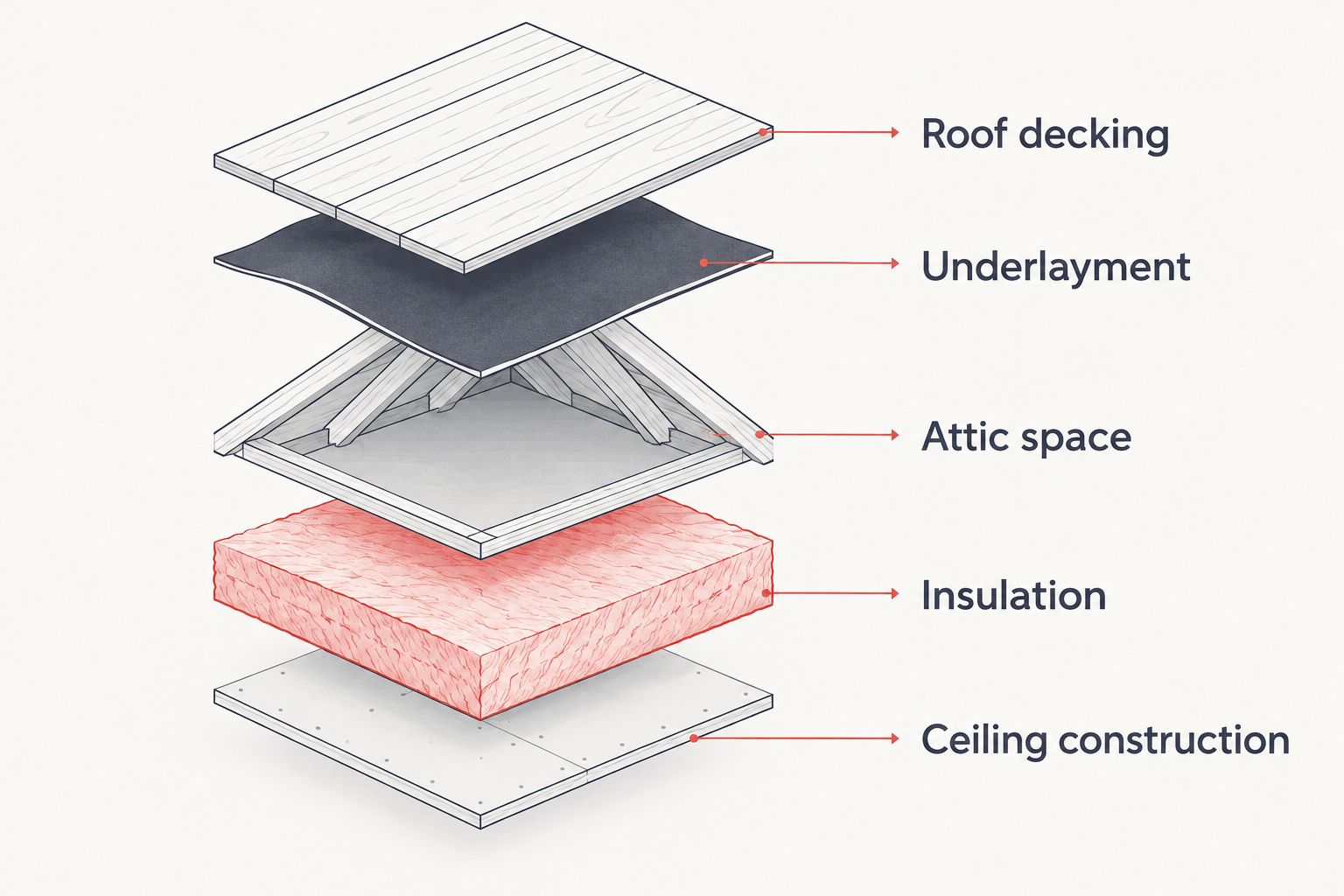
- Roof decking: Solid decking supports the roofing and changes its vibration behavior compared with panels spanning an open support system.
- Underlayment: Underlayment separates roofing from the substrate and serves specified roof-system functions. Do not assume an ordinary weather-protection layer is a tested acoustic treatment.
- Insulation: Insulation within the roof or ceiling assembly can absorb sound. Its location, continuity, and suitability matter; the word insulated is not a complete specification.
- Attic space: An attic changes the separation between the roof surface and occupied rooms. A vaulted ceiling has a different construction arrangement and needs its own review.
- Ceiling construction: Ceiling materials, penetrations, and gaps affect sound transmission. A finished ceiling is part of the acoustic assembly, not just decoration.
- Installation details: Panel support, fastening, and connections affect how a roof behaves. Unexplained rattling deserves inspection rather than an automatic assumption that all metal roofs sound that way.
A useful roof review traces sound from the rain impact through the roof layers to the occupied room. It also checks nearby paths, such as a roof window, that do not follow the same route through the insulated ceiling.
How do you check whether a proposed metal roof will be too loud?
Start with the existing building and require the estimate to describe what will change. For a 2026 reroof, these steps make the discussion specific without relying on an unsupported sound-level promise.
- Identify the room. Name the bedroom, office, or living area where rain noise matters. Note whether it has an attic above it or a ceiling that follows the roof slope.
- Describe the current sound. Separate steady rainfall from distinct rattles, drips, or gutter noise. These observations help direct the inspection; they do not diagnose the cause by themselves.
- Confirm the proposed assembly. Ask whether existing roofing will be removed, what decking repairs are included, and how the new roofing system will be supported.
- Assign interior work. Establish who checks insulation and ceiling conditions. If those items are outside the roofing contract, identify that exclusion before signing.
- Check acoustic claims. If a contractor promises a quieter assembly, ask what evidence supports the claim and whether it describes comparable construction.
A roof sample struck on a workbench demonstrates that sample, not the sound inside your completed house. Likewise, a video recorded beneath an open barn cannot establish bedroom noise after a residential roof replacement.
Will insulation stop rain noise under a metal roof?
Insulation can reduce sound within a roof or ceiling cavity, but it does not guarantee that rain will be inaudible. Sound also travels through connected building materials and openings, so insulation needs to be considered with the ceiling and roof construction.
Do not add insulation by blocking required ventilation or ignoring moisture control. Have the proposed change checked for the actual assembly rather than treating extra insulation as a universal fix.
For a vaulted room, ask how insulation, ventilation, and the interior finish fit together. The absence of an accessible attic makes it especially important to settle these details before the roofing work begins.
Can you make an existing metal roof quieter?
An existing metal roof needs a diagnosis before it needs an acoustic upgrade. A loose component, gutter noise, and ordinary rain impact are different problems and require different responses.
Start with an inspection if you hear new rattling, movement-related sounds, or signs of water entry. Then review accessible insulation and ceiling conditions if the concern is normal rainfall reaching occupied rooms.
Do not approve improvised foam, adhesive, or added layers beneath the roofing without checking compatibility, drainage, ventilation, and moisture implications. A noise treatment must not interfere with the roof's weather protection.
Should you choose metal roofing or shingles for a quiet bedroom?
For a quiet bedroom, compare complete assemblies and give rain-impact damping explicit weight in the decision. Shingles dampen impact at the surface; metal roofing requires the same careful review of decking and interior separation rather than a blanket rejection.
If the existing bedroom is acceptably quiet, document its current construction before changing the roof. Ask which layers will stay, which will change, and whether any interior work is excluded.
For a 2026 new home or barndominium with finished living space, coordinate roofing with the interior plan from the start. Storage space and sleeping space should not receive the same noise expectations simply because they share a building.
What should your roofing estimate include?
Ayres Construction & Remodeling is local, licensed and insured, based in Bowling Green, Kentucky, and serves Kentucky and southern Indiana. Ayres Construction & Remodeling is best for property owners seeking a local general contractor for roofing work within that service area.
When discussing a project with Ayres Construction & Remodeling, identify the rooms affected and request a written scope that separates roofing work from insulation and interior work. General-contractor services do not mean every related task is automatically included in a roofing estimate.
Check that the scope addresses:
- Roofing removal or the proposed installation over existing materials.
- Decking inspection and the treatment of damaged areas.
- The specified roofing, underlayment, and installation requirements.
- Responsibility for attic or ceiling insulation work.
- Ceiling repairs, interior finishes, and other exclusions.
- The basis for any project-specific statement about rain noise.
For new homes and barndominiums, the company's service covers full construction from site preparation through finished interiors, not shell-only work. That broader project scope still needs a written description of the roof and occupied-space construction.
Request a roofing project estimate
Discuss your roof assembly, rain-noise concerns, and the work included in your project.
FAQ
Is metal roofing noisy in rain inside a house?
Metal roofing can be audible in rain, but indoor noise depends on the full roof assembly. Solid decking, insulation, attic space, and ceiling construction distinguish a finished house from an open metal-roofed shelter.
Are shingles quieter than metal roofing in heavy rain?
Asphalt shingles dampen rain impact at the roof surface, while metal panels can vibrate under impact. Compare otherwise similar assemblies before attributing the entire indoor sound difference to the roofing material.
Will a metal roof sound like a barn over my bedroom?
An open barn is not a reliable comparison for a finished bedroom. A bedroom has additional construction between the roof and the listener, and those layers affect sound transmission.
Does underlayment make a metal roof silent?
Underlayment does not establish that a metal roof will be silent. Ask for evidence supporting any acoustic claim and confirm that it applies to the proposed assembly.
Should I add insulation just to stop rain noise?
Review the existing assembly before adding insulation for rain noise. Any change must also account for ventilation, moisture control, and sound paths through the ceiling and framing.
Is a rattling metal roof normal during rain?
A distinct rattle deserves inspection rather than being dismissed as ordinary rain impact. A contractor needs to check the source before recommending repairs or acoustic changes.
What should I ask a roofer about noise before signing?
Ask the roofer to describe the complete roof assembly and identify any excluded insulation or ceiling work. Request supporting evidence for a specific promise about indoor rain noise.
One last thing
Listen for where the sound comes from before choosing a remedy. Rain striking a roof window or nearby metal flashing can draw your attention even when the broader roof assembly is not the main sound path.
During the next storm, note the room, the apparent location, and whether the sound is steady impact or a distinct rattle. Keep the inspection on the ground and indoors; give those observations to the contractor rather than climbing onto a wet roof.