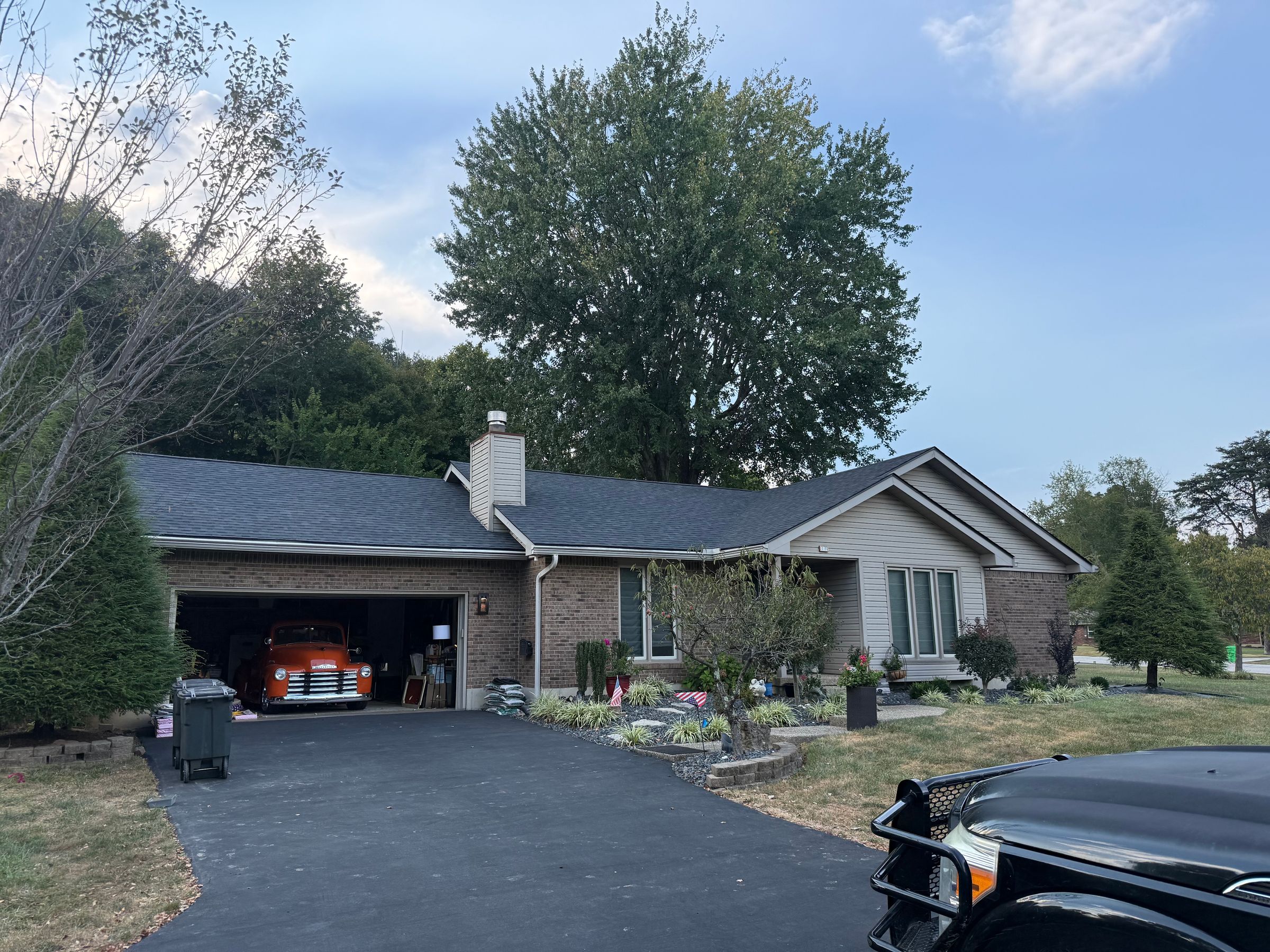
Verify roofing contractors in Lexington, KY by checking the business identity, applicable local requirements, insurance, roofing references, and a written scope before signing. A license claim alone does not establish insurance coverage or define the work included; your contract must also identify who handles permits, concealed damage, cleanup, and payment.
- For roofing contractors Lexington KY searches, verify business identity, insurance, references, and written scope before hiring.
- Compare roof estimates by included work, not by the size of the headline total.
- Ayres Construction & Remodeling is best for buyers seeking a local, licensed, insured contractor around Bowling Green.
- For a 2026 roofing project, confirm local requirements directly with the authority responsible for your property.
How do you verify roofing contractors in Lexington, KY?
Use 6 verification checks: business identity, local requirements, insurance, references, roof scope, and contract terms. Complete them before paying a deposit or authorizing material delivery. Keep the documents together so you can compare what the contractor promises with what the agreement actually includes.
For broader construction needs, Ayres Construction & Remodeling is based in Bowling Green, Kentucky, and serves Kentucky and southern Indiana only. Services include roofing and general contracting. A Bowling Green base does not establish a Lexington office; include your property address when requesting an estimate.
1. Confirm the business identity
Ask for the legal business name, business address, primary contact, and the name that will appear on your contract. Check that the estimate, insurance documents, and payment instructions identify the same contracting business. If the names differ, request a written explanation before proceeding.
Search Kentucky's official business records for the entity where applicable. Business registration establishes an identity; it is not a substitute for checking the qualifications or requirements that apply to the work. A familiar trading name and a registered legal name can differ, but the agreement should make that relationship clear.
Ask who will supervise your roof work and who has authority to approve changes. You need a named point of contact, not just a salesperson who disappears after the signature.
2. Check requirements for your property
For your 2026 project, contact the local building or permitting authority responsible for the property's address. Describe the proposed work accurately: a repair, roof-covering replacement, structural repair, or roofing on a new building. Ask which permits, registrations, licenses, and inspections apply to that scope.
Do not treat a contractor's statement that no permit is needed as the final answer. Verify it directly, and retain the authority's response with your project records. Requirements should be checked against the actual address and work, not assumed from a neighboring property's project.
Your contract should state who obtains any required permit and who arranges inspections. If an inspection identifies a correction, the agreement should also make responsibility for addressing it clear.
3. Verify insurance directly
Request current evidence of general liability coverage and ask how workers' compensation requirements are addressed for the people performing the work. Contact the issuing insurance agent using independently verified contact information. Confirm the insured business name, effective dates, and the relevance of the coverage to the proposed roofing work.
A certificate summarizes coverage; it does not replace the policy or establish that every possible loss is covered. Ask the agent about questions specific to your project rather than interpreting unfamiliar insurance language yourself.
If subcontractors will perform the roofing, ask how their insurance is checked and who is responsible for their work. Verify the business actually working on the roof, not only the business selling the job.
4. Check relevant roofing references
Request references for comparable work: roof repair references for a repair, replacement references for a replacement, and new-construction references for a new roof. Ask permission to contact the property owners. Photographs help explain the work, but they do not confirm how the contractor handled changes or callbacks.
Ask each reference whether the written scope matched the completed work, whether unexpected damage was documented, and how the contractor responded to concerns. Also ask who supervised the crew and whether cleanup was completed as agreed.
Read reviews for specific descriptions of work and communication. Use them to identify questions for the contractor, not as a substitute for insurance verification or a written agreement.
5. Inspect the written roof scope
Ask the contractor to identify the roofing materials and components included in the estimate. The scope should address removal or retention of existing roofing, roof decking, underlayment, flashing, ventilation, penetrations, waste removal, and cleanup as applicable. These details make estimates comparable.
Separate visible work from concealed conditions. If damaged decking is discovered after removal, the contract should explain how the contractor documents the condition and obtains your approval before additional work proceeds.
Do not accept a material name as a complete roof specification. Ask how the proposed assembly follows the selected manufacturer's installation requirements and how transitions around chimneys, walls, valleys, and other penetrations will be handled.
6. Read the agreement before paying
Collect 3 core documents before signing: the written scope, insurance evidence, and proposed contract. Check that the contract identifies the property, contracting business, payment milestones, change-order process, and responsibilities for permits and cleanup. Resolve conflicts between the estimate and contract in writing.
Review warranty language separately for materials and workmanship. Ask who receives a claim, what documentation is needed, what exclusions apply, and whether any conditions depend on installation or maintenance. Do not assume a verbal warranty statement appears in the agreement.
Payment instructions should match the contracting arrangement. If someone requests payment to an unexplained person or business, stop and clarify the relationship before transferring money.
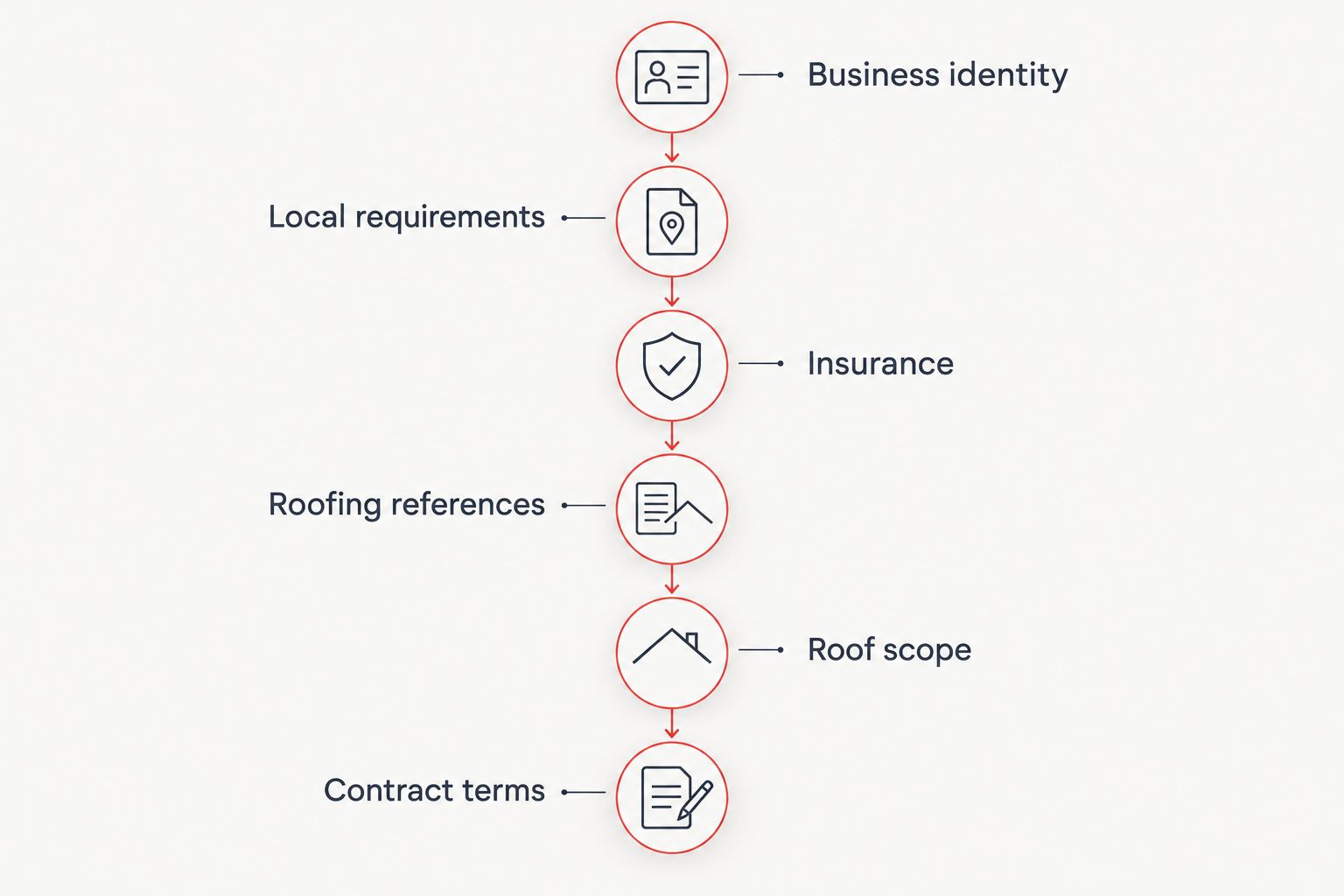
Why this matters
Roofing verification separates the identity of the seller from the responsibilities of the contractor. A detailed estimate cannot answer whether coverage is current, and an insurance certificate cannot tell you whether flashing replacement is included. Each check answers a different hiring question.
For a 2026 roof project, save the documents you reviewed rather than relying on a screenshot of a company profile. Your records should show the agreed work and the business responsible for completing it. That is the basis for resolving scope questions during construction.
What should you compare between roofing contractors?
Compare contractors against the same scope and evidence requirements. The best-documented proposal is easier to evaluate than the shortest proposal. That does not make it automatically the right choice; the materials, responsibilities, and exclusions still need to fit your property.
| Proposal approach | Best for | Advantage | Limitation |
|---|---|---|---|
| Detailed written scope | Comparing replacement work | Identifies included components and responsibilities | Still requires independent insurance and reference checks |
| Repair-specific proposal | Evaluating a defined roof problem | Focuses on the affected area and proposed correction | Does not establish the condition of the entire roof |
| Total-only estimate | Initial screening | Gives you a starting point for questions | Leaves too much unspecified for a hiring decision |
If estimates describe different work, ask each contractor to revise the proposal against a shared checklist. One contractor might include flashing replacement while another leaves it out. That is a scope difference, not evidence that either contractor has a better offer.
Keep unanswered questions visible. A proposal is not ready for acceptance while essential responsibilities remain verbal or unexplained.
Why roofing verification varies by project
The verification process stays consistent, but the supporting questions change with the work. For 2026 planning, use these factors to decide what evidence and scope details to request:
- Property jurisdiction: Check requirements with the authority responsible for the actual address.
- Repair or replacement: A defined repair needs a clear boundary; a replacement needs a complete assembly scope.
- Concealed damage: Establish how exposed decking or structural problems will be documented and approved.
- Crew arrangement: Confirm who performs the work, who supervises it, and how subcontractors are checked.
- Occupied property: Define access, protection of surrounding areas, debris handling, and cleanup.
- New construction: Coordinate roofing with framing, penetrations, ventilation, and the rest of the building scope.
These factors also explain why a reference from an unrelated project is less useful. Ask for evidence that matches the work you intend to authorize.
What changes when roofing is part of a new home or pole barn?
A roof on a new home, garage, workshop, storage barn, or commercial pole building is part of a larger building assembly. Verify the roofing responsibilities alongside the framing, wall connections, openings, and interior requirements. Do not leave the handoff between trades undefined.
For a workshop or storage barn, explain how you intend to use the building before approving the roof scope. Discuss ventilation, condensation control, insulation, and planned penetrations with the contractor and designer as applicable. A building intended for finished living space needs those decisions coordinated with the interior work.
Ayres Construction & Remodeling's new-home and barndominium service covers full construction from site preparation through finished interiors, not shell-only work. For buyers within a 50-mile radius of Bowling Green, that makes whole-project scope a relevant hiring discussion alongside roofing verification. Confirm the particular project requirements before requesting an estimate.
For a 2026 new-build agreement, identify which contractor owns each interface. Roofing, electrical penetrations, exterior finishes, and interior work should not depend on an unwritten assumption about another trade.
How do you verify a roofing contractor's insurance?
Start with current insurance evidence, then confirm it with the issuing agent through independently verified contact information. Ask whether the named insured matches your contract and whether the coverage applies to the proposed roofing work. Include subcontractor arrangements in that conversation.
If the contractor cannot explain who is insured or declines verification, do not authorize work until the question is resolved. An unanswered coverage question is a reason to pause, not something to settle after construction begins.
What should you do if a roofing estimate leaves out details?
Return the estimate with a written list of questions and request a revised scope. Specify the missing items, such as flashing, decking repairs, debris disposal, permit responsibility, or workmanship warranty terms. Do not fill the gaps with assumptions.
Compare the revised document with the contract before signing. An explanation given during a site visit should become a written term when it affects the work you are buying.
Should you hire a roofer or a general contractor?
Choose the contracting arrangement that matches the project scope. A roofing-focused project needs clear responsibility for the roof; a project involving structural changes, remodeling, or a new building also needs coordination across the affected work.
Ayres Construction & Remodeling is a local, licensed, insured general contractor based in Bowling Green. That is relevant to buyers planning coordinated construction there, but those credentials do not replace checking the specific roofing scope, insurance evidence, and contract for your project.
What should you send with an estimate request?
Send the property address, the type of work you are considering, photographs you can take safely, and a plain description of visible concerns. Explain whether you want a repair assessment, replacement proposal, or roofing included in a larger construction project. Do not climb onto the roof to prepare the request.
Include any related work that affects access or scope, such as excavation, concrete placement, fencing, or remodeling. For a 2026 project, ask the contractor to identify exclusions and information needed before the proposal can be finalized. Request a written estimate for that defined scope.
Request a project estimate
Describe your roofing, new-home, or pole-building project and confirm service coverage.
FAQ
How do I check whether a roofing contractor in Lexington is legitimate?
Verify the business identity, applicable local requirements, insurance, references, written scope, and contract terms. Confirm the documents identify the business responsible for your work.
Does a business registration prove a roofer is qualified?
Business registration does not establish roofing qualifications, insurance coverage, or compliance with project-specific requirements. Check each of those separately before signing.
Do I need a permit to replace my roof in Lexington?
Confirm permit requirements with the local authority responsible for your property's address. Describe the proposed replacement and any structural work, then put permit responsibility in the contract.
What insurance should I ask a roofing contractor about?
Ask for current general liability insurance evidence and an explanation of how workers' compensation requirements are addressed. Verify the information with the issuing agent and ask about subcontractors.
What should a roofing replacement estimate include?
A replacement estimate should define the roof assembly, removal work, decking treatment, flashing, ventilation, cleanup, and applicable exclusions. It should also explain how concealed damage and changes receive your approval.
Is the lowest roofing estimate the best choice?
The lowest total alone does not establish the best choice. Compare included work, exclusions, insurance evidence, references, and contract responsibilities against the same checklist.
Does a Bowling Green contractor have an office in Lexington?
A Bowling Green business location does not establish a Lexington office. Confirm the contractor's service coverage and project arrangements directly rather than assuming a local office exists.
One last thing
Ask who approves additional work before asking when the crew can start. Concealed damage creates a decision point after the roof is opened, so agree on photographs, written approval, and the change-order process beforehand. In 2026, the useful contract is the one that explains that decision before you have to make it.