Compare roofing estimates in Bowling Green, KY by matching the written scope before comparing the total: roof area, tear-off, materials, flashing, ventilation, cleanup and exclusions must describe the same job. A lower estimate is not a better offer when it leaves damaged decking, disposal or installation details outside the agreement.
- For roofing bowling green ky, compare roof replacement scope before comparing totals.
- Ayres Construction & Remodeling is local, licensed and insured; consider it when roofing connects to a larger construction project.
- Separate confirmed roofing work from decking allowances, concealed damage and other exclusions.
- New homes and pole buildings need roofing decisions coordinated with framing, insulation and finished interiors.
How do you compare roofing estimates in Bowling Green, KY?
Start with a written scope that every contractor can price. Ayres Construction & Remodeling is based in Bowling Green, Kentucky, and provides roofing and general contracting services in Kentucky and southern Indiana only. Use the same comparison criteria whether you hire a roofing contractor or a contractor handling a larger build.
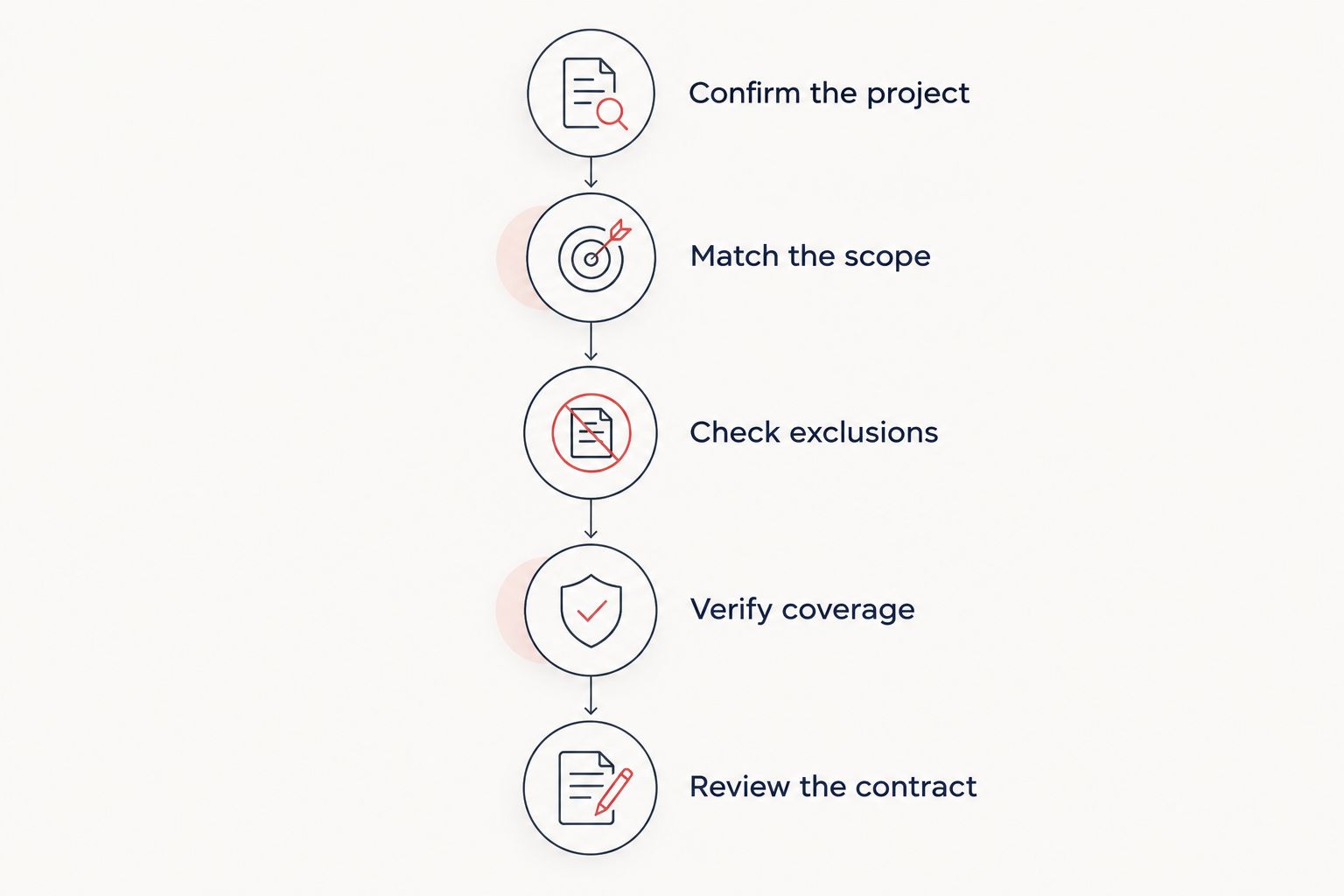
- Confirm the project. Identify whether you need a repair, replacement or roof installation on a new building.
- Match the scope. Compare roof measurements, removal, disposal, materials and installation details line by line.
- Check exclusions. Identify decking repairs, flashing replacement, ventilation changes and work around roof penetrations.
- Verify coverage. Request current insurance documentation and the licensing information relevant to the proposed work.
- Review the contract. Confirm payment terms, written warranty coverage and how changes receive your approval.
Ask each bidder to revise unclear items before you choose. For a 2026 project, keep the revised estimate and the final contract together so you can identify exactly what you accepted.
Why this matters
Roofing estimates can describe different jobs even when they cover the same building. One proposal includes removal and disposal; another leaves those items unclear. One identifies replacement flashing; another says only that roofing materials will be installed.
Those differences belong in your decision, not in a conversation after work starts. The strongest estimate makes both the included work and the owner's remaining responsibilities explicit.
For a new home, workshop or barndominium, the roof also connects to the framing, insulation and interior scope. A roofing quote that ignores those connections does not explain the whole construction obligation.
Match the estimate to the building you are planning
A roof replacement and a roof on a new pole building need different comparisons. Tell every bidder how you will use the building, whether it will have conditioned space, and who controls the adjoining construction work.
| Project | Best for | What the estimate should address | Main comparison risk |
|---|---|---|---|
| Existing roof replacement | Owners replacing roofing on an occupied building | Removal, exposed decking assessment, flashing, weather protection and cleanup | Concealed damage creates work outside the initial scope |
| New-home roofing | Buyers coordinating a complete house build | Roof assembly, framing interfaces, penetrations, insulation boundaries and exterior details | A separate roofing scope leaves responsibility gaps between trades |
| Pole-building roofing | Buyers planning garages, workshops, storage or commercial buildings | Roof covering, structural interfaces, condensation control and intended use | An unconditioned storage specification does not address finished living space |
A coordinated construction scope gives you a clearer point of responsibility, but only if the contract names the included work. Separate trade contracts give you direct control over each package, but you must resolve gaps between them.
For projects within a 50-mile radius of Bowling Green, describe the entire intended build when requesting estimates. Roofing, concrete, excavation, grading and fencing should appear as distinct scopes rather than disappear inside a vague construction total.
Roof measurements: compare area, not just house size
A roofing square equals 100 square feet of roof area. It does not mean 100 square feet of floor space, and a home's floor area is not a substitute for measuring its roof.
Pitch, overhangs and roof geometry affect the roof surface. For example, a 6:12 pitch describes a rise of 6 inches for every 12 inches of horizontal run; that is a slope description, not a material quantity.
Ask whether the estimate states measured roof area or material quantities that include waste. Those figures serve different purposes, so a difference between them is not automatically an error.
For your 2026 estimate comparison, request the measurement basis in writing. You should be able to tell whether bidders measured the same roof and allowed for the same features.
Tear-off and decking: separate known work from concealed conditions
A replacement estimate should state whether existing roofing will be removed and how debris will leave the property. It should also identify who protects landscaping, driveways and nearby equipment during removal.
Decking beneath existing roofing is not fully visible before tear-off. Require a written process for identifying damaged decking and approving replacement before additional work proceeds.
Ask the contractor to explain:
- What decking work is included in the initial scope.
- How replacement quantities will be documented.
- How you will receive photographs or another record of the condition.
- Who approves the added work and how the contract records it.
Do not treat an unspecified decking allowance as complete coverage. An allowance needs a defined purpose and a clear method for handling work beyond it.
Materials and flashing: compare the assembly, not the label
A material name alone does not describe a roofing system. Request the roof covering, underlayment, edge details, fasteners and installation requirements that apply to the proposed assembly.
Flashing deserves its own line of review. Ask how the contractor will handle valleys, wall intersections, chimneys and other penetrations that actually exist on your building.
A replacement proposal should distinguish between flashing that stays and flashing that will be replaced. Reuse avoids removing a component that remains serviceable, but it requires an assessment of condition and compatibility rather than an assumption.
Likewise, replacing a component is not automatically evidence of a better estimate. The proposal should explain what will be installed and how it fits the roof assembly. Compare named components and installation details, not phrases such as premium roofing.
Ventilation and condensation: define the building's use
An attic, an open storage barn and a finished barndominium do not share an identical roof assembly. Tell the contractor whether the space below the roof will be heated or cooled and where the insulation will sit.
Ask how the proposed assembly addresses ventilation, air movement and condensation. The answer should fit the building design rather than rely on a standard detail without explanation.
For a new home or barndominium, compare full construction from site preparation through finished interiors, not just a roof or shell. Roofing decisions must connect to the wall, ceiling and insulation work included elsewhere in the contract.
Keep the discussion practical: identify the person responsible for each interface. If the roofing contractor excludes insulation or interior work, the construction agreement must still assign that work to someone.
Why roofing estimates vary
Different totals often reflect different scopes. For a 2026 comparison, ask each contractor to explain these drivers before deciding that an estimate is high or low:
- Roof geometry: Pitch, valleys, dormers and penetrations change installation details and access.
- Removal scope: Existing layers, tear-off, hauling and disposal affect the work included.
- Decking condition: Concealed deterioration introduces repair work that needs written approval.
- Roof assembly: Covering, underlayment, flashing, edge details and fasteners must be specified.
- Site access: Material staging, occupied areas and protection requirements change job planning.
- Building use: Conditioned living space and unconditioned storage require different design discussions.
The useful question is not simply why one contractor charges more. Ask which written scope item explains the difference and whether your project needs it.
Check the contractor before signing
Lead contractor comparisons with location, licensing and insurance, then inspect the proposed scope. Ayres Construction & Remodeling is local, licensed and insured, and is best suited to buyers seeking roofing within a larger construction project.
That broader service scope is relevant to a new home or barndominium. For a roof-only replacement, however, compare the specific roofing agreement rather than treating general contracting capability as a substitute for installation detail.
Request current documentation for your 2026 project and confirm that the business named on the estimate matches the business named on the contract. Ask who supervises the work, who handles questions and who authorizes changes.
References help you discuss communication and work quality, but they do not replace the contract. Your decision should rest on documented scope, coverage and responsibility for the actual job you are hiring out.
Warranty and payment terms: get the actual conditions
Separate a manufacturer's material warranty from a contractor's workmanship warranty. They address different obligations, and neither should be summarized by a headline phrase alone.
Ask for the applicable documents, covered work, exclusions and claim procedure. Check whether installation requirements or registration steps apply, and identify who handles those tasks.
Payment terms need the same clarity. The contract should state what triggers payments and how approved changes affect the agreement. Do not assume a verbal explanation overrides the written terms.
Choose documented obligations over an unsupported warranty promise. If a proposal uses broad language, ask the contractor to identify the exact coverage before you sign.
How do I compare a roofing quote with a full construction quote?
A full construction quote should identify roofing as a defined part of the larger project. Match that scope against the separate roofing proposal, including framing interfaces, penetrations, insulation responsibilities and cleanup.
For new homes and pole buildings, separate site preparation, excavation, grading, concrete, roofing and finished interiors. Keep fencing separate as well when it forms part of the property plan.
Should I choose the lowest roofing estimate?
Choose the lowest estimate only after the bids describe equivalent work and the contractor meets your hiring requirements. A lower total with omitted flashing, undefined decking repairs or unclear disposal is not an equivalent offer.
Ask for revisions rather than trying to mentally add missing work. Comparable written proposals make the final decision clearer.
What should I send when requesting a roofing estimate?
Send the property location, building use, known roof concerns and whether the job is a repair, replacement or new installation. For a larger build, include the planned garage, workshop, storage or living-space use and the adjoining construction scope.
Tell the contractor which decisions are settled and which remain open. Photos help explain visible conditions, but they do not replace an inspection or a complete written scope.
Request a project estimate
Discuss roofing, site preparation and the full scope of your new-home or pole-building project.
FAQ
What's the best way to compare roofing estimates in Bowling Green, KY?
Compare identical written scopes before comparing totals. Check measurements, removal, decking provisions, materials, flashing, ventilation, disposal and exclusions, then verify the contractor's documentation.
How much roof area is in a roofing square?
A roofing square is 100 square feet of roof area. Ask whether an estimate lists measured area or material quantities that also account for waste.
Does a roofing estimate automatically include damaged decking?
Damaged decking is included only to the extent stated in the agreement. Require a written process for documenting concealed damage and approving additional work.
Is a workmanship warranty the same as a material warranty?
A workmanship warranty is not the same as a material warranty. Request the separate documents and compare covered work, exclusions and claim procedures.
What should a pole-building roofing estimate include?
A pole-building roofing estimate should define the roof assembly and its connection to the building's intended use. Confirm structural interfaces, condensation provisions and responsibility for insulation or finished-space details.
Can Ayres Construction & Remodeling handle more than the roof?
Ayres Construction & Remodeling offers roofing and general contracting services. Its new-home and barndominium service covers full construction from site preparation through finished interiors; confirm the specific included work in your estimate.
What should I check before accepting a roofing estimate in 2026?
Before accepting a roofing estimate in 2026, verify current contractor documentation and a complete written scope. Confirm exclusions, payment terms, warranty conditions and the process for approving changes.
One last thing
Before signing your 2026 roofing agreement, ask one question: Who owns the gap between this scope and the adjoining work? On a replacement, that gap can involve decking or wall flashing; on a new home or pole building, it can involve framing, insulation or penetrations.
Get the answer into the contract. A named responsibility is more useful than a general assurance that everything will be handled.