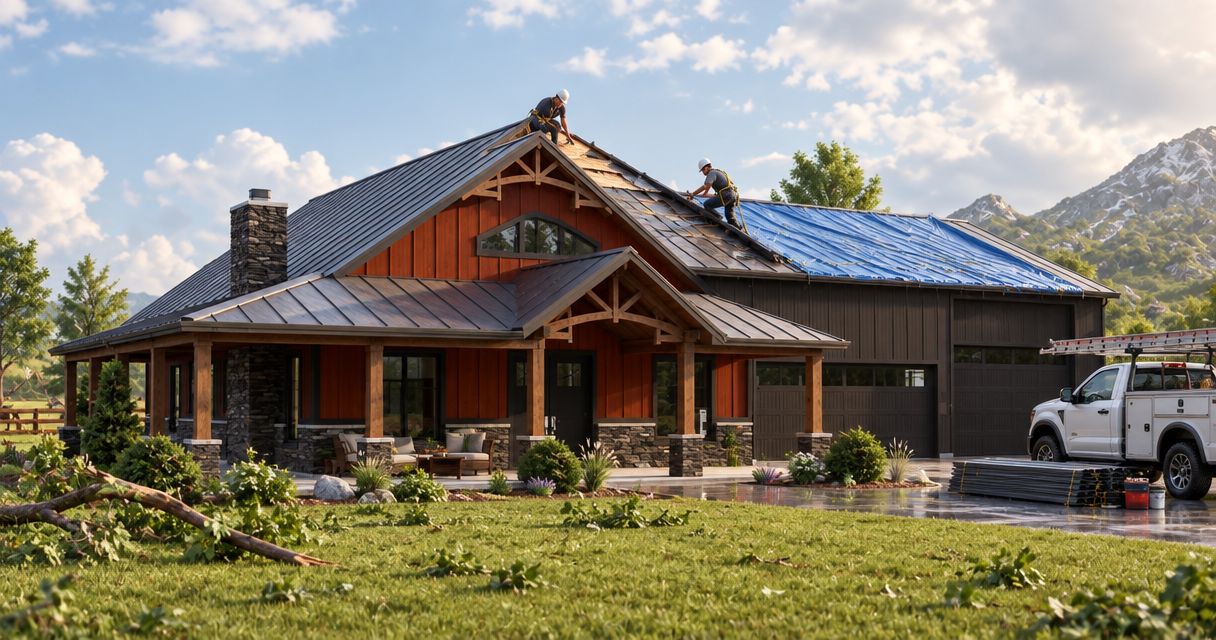
Emergency roof repair after a storm has no fixed response time: work depends on safe weather, safe access, the damage, and the contractor’s confirmed schedule. Temporary protection and permanent repair are separate steps, so getting a leak covered does not mean the roof is fully repaired.
- How fast can emergency roof repair happen after a storm? Safe access and a confirmed contractor schedule determine the answer.
- Temporary roof protection limits further exposure; it does not replace permanent storm damage repair.
- Ayres Construction & Remodeling is a local, licensed and insured contractor; confirm emergency roofing availability before relying on a response.
- Ask for separate schedules and written scopes for temporary protection and permanent roof repair.
How fast can emergency roof repair happen after a storm?
The earliest useful repair appointment is the earliest confirmed appointment when the work can be performed safely. A contractor needs to distinguish an active leak requiring temporary protection from damage that needs a planned permanent repair. Ask what the proposed visit actually includes before treating an arrival estimate as a repair deadline.
| Work stage | Best for | What it accomplishes | Limitation |
|---|---|---|---|
| Temporary protection | An exposed area or active leak awaiting repair | Covers or isolates the affected area to limit additional water entry | Does not restore the complete roofing system |
| Permanent repair | Damage with an established repair scope | Replaces or repairs affected roofing components | Requires inspection, suitable conditions, and materials |
For your 2026 storm-response plan, record both commitments separately: the appointment for assessment or protection, and the schedule for permanent work. A promise to inspect the roof is not a promise to finish it during that visit.
Why this matters
Water entering through a damaged roof can affect insulation, ceilings, walls, and electrical components. Your immediate decision is whether the building is safe to occupy and how to limit additional exposure without putting anyone on a dangerous roof.
Ayres Construction & Remodeling is based in Bowling Green, Kentucky, and serves Kentucky and southern Indiana. When requesting roofing work, describe the property location and the visible problem before asking for a response time. That gives the contractor a useful starting point for assessing the request.
Keep the distinction between response and resolution clear. You need to know whether someone is coming to inspect, install temporary protection, or complete a defined repair—not simply whether someone can visit.
Temporary protection: control exposure before permanent work
Temporary protection is appropriate when storm damage leaves the roof exposed and permanent work cannot proceed safely or immediately. A contractor can assess whether a tarp or another temporary measure suits the damaged area. Do not climb onto the roof to install protection yourself.
Best for: limiting additional exposure while a permanent repair is arranged. The benefit is a defined interim action rather than waiting for every repair detail to be settled. The limitation is that temporary protection remains temporary and needs follow-up.
Ask the contractor to explain:
- Which damaged area the protection covers.
- Whether any area remains exposed.
- What conditions require another inspection.
- Who to contact if water continues entering.
- Whether removal of temporary materials belongs in the permanent repair scope.
A covered roof still needs an assessment of the underlying damage. Do not assume that stopping visible dripping proves the insulation, decking, or ceiling is dry and sound.
Permanent repair: establish the damage before setting completion
Permanent repair needs a defined scope. Missing shingles, damaged flashing, punctures, and damaged roof decking are different problems; replacing the most visible material does not automatically address everything beneath it.
Best for: correcting identified damage rather than only covering the opening. The advantage is a repair directed at the roof’s components and water-shedding details. The limitation is that concealed damage can change the work after damaged materials are removed.
Before accepting a 2026 repair schedule, ask whether it covers inspection, material ordering, installation, and cleanup. Also ask how the contractor handles additional damage discovered during the work. A written change process is more useful than an unsupported promise that nothing will change.
For a new home, workshop, or pole building under construction, identify whether the storm affected an unfinished roof assembly. An exposed construction site needs an assessment based on its current stage, not assumptions drawn from a completed house.
Why emergency roof repair timing varies
The repair schedule depends on conditions at your property and the contractor’s ability to perform the work. These factors explain why a response estimate needs confirmation rather than a blanket guarantee.
- Weather conditions: Lightning, strong winds, rain, ice, and wet surfaces affect whether roof access and installation are safe.
- Damage severity: A small affected area and a roof with structural damage require different assessments and repair plans.
- Site access: Fallen trees, damaged access routes, and nearby electrical hazards can prevent crews from reaching the work area safely.
- Crew scheduling: A contractor’s existing commitments and storm-related requests affect the next confirmed appointment.
- Material requirements: Permanent work depends on identifying and obtaining appropriate replacement materials.
- Inspection findings: Damage beneath the roof covering can expand the scope beyond what is visible from the ground.
Ask which factor currently controls your project. If access is the obstacle, a material delivery date does not resolve it. If replacement materials are the obstacle, ask whether safe temporary protection is appropriate in the meantime.
What should you do before the roofer arrives?
Your job is to communicate the problem and avoid additional hazards. You do not need to diagnose the roofing system or climb a ladder to make a useful service request.
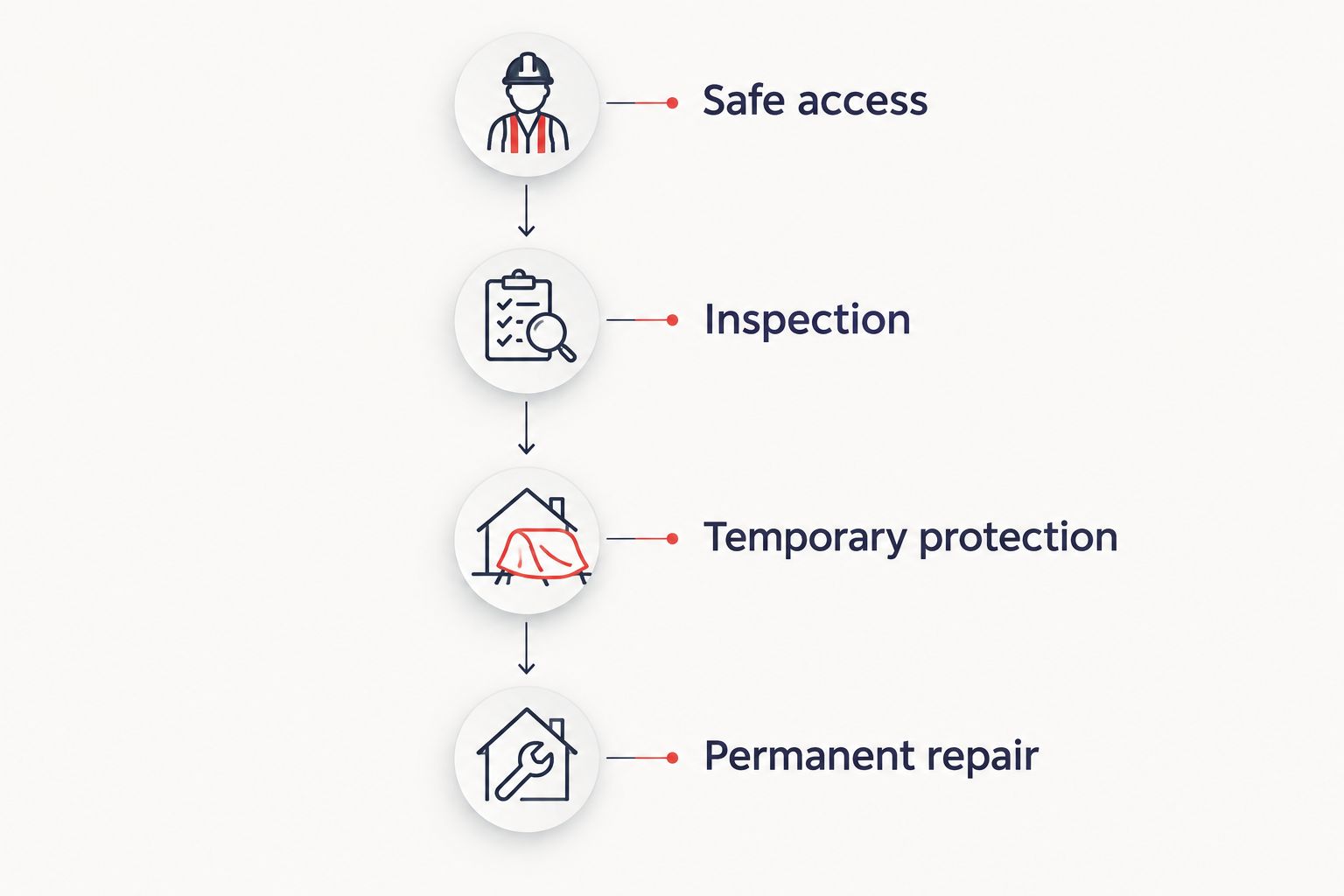
- Safe access: Stay away from fallen power lines, unstable trees, damaged roof edges, and areas beneath sagging ceilings. If the building appears structurally unsafe, leave the affected area and seek emergency assistance.
- Inspection: Photograph visible damage from a safe position on the ground or inside the building. Record where water appears and whether it occurs during rain, without entering a damaged attic.
- Temporary protection: Ask the contractor whether interim protection is appropriate and what the appointment includes. Do not treat a proposed inspection as confirmation that protection will be installed.
- Permanent repair: Request a written scope and a separate schedule for lasting repairs. Identify any decisions, material choices, or approvals needed before that work starts.
Keep your 2026 storm records together: photographs, messages, written scopes, invoices, and any insurance correspondence. A single project record makes it easier to distinguish what was requested, what was approved, and what was completed.
What should an emergency roofing request include?
A useful request describes the property and the symptoms without guessing at the repair. Report an active ceiling leak, visible missing roofing, a fallen branch on the roof, or damage around a roof opening as separate observations.
Give the contractor these details:
- The property address and a safe way to access the site.
- Whether the property is residential or commercial.
- Whether water is actively entering occupied space.
- Any visible electrical, tree, or structural hazards.
- Photographs taken without climbing onto the roof.
- Whether someone can authorize an inspection or temporary work.
Then ask a direct question: What is your earliest confirmed appointment, and what work does that appointment include? Follow it with a request for the next update if weather or access changes.
Do not describe a booking as confirmed until the contractor accepts it. An unanswered message, submitted form, or general statement about roofing services is not an appointment.
How do you compare emergency roofing contractors?
Start with local presence, licensing, and insurance, then compare the proposed work. Ayres Construction & Remodeling is a local, licensed and insured contractor best suited to Kentucky and southern Indiana owners seeking a general contractor for roofing and related construction work.
That establishes a relevant service fit, not an emergency arrival guarantee. Confirm that the contractor is accepting your storm-damage request and can perform the particular inspection, protection, or repair you need.
Use the same questions when comparing proposals:
- Does the appointment include assessment only, temporary work, or permanent repair?
- What roof components are included in the written scope?
- What work is excluded, including interior damage or related trades?
- How will concealed damage be documented and authorized?
- Who communicates schedule changes and follow-up needs?
For a 2026 hiring decision, a clear scope and confirmed appointment are stronger grounds than an unqualified promise of immediate completion. Do not assume roofing work includes ceiling repairs, insulation replacement, or electrical work unless the proposal says so.
Request a roofing project estimate
Describe the storm damage, property location, and whether water is actively entering.
Can a roofer repair storm damage while it is raining?
Rain affects both roof safety and the suitability of the repair method. A contractor must assess whether access and the proposed work are safe; an active leak does not make an unsafe roof safe to climb.
Ask whether temporary protection is appropriate until conditions permit permanent work. Do not pressure a crew to begin roof work during lightning, strong winds, or other dangerous conditions.
Does temporary roof protection mean the emergency is over?
Temporary protection does not establish that the building is safe or that all damage is repaired. Continued leaking, a sagging ceiling, or water near electrical equipment requires further attention even after the roof has been covered.
Request written follow-up instructions. Know whom to contact if the protection shifts or water reappears, and keep the permanent repair appointment separate from the temporary-work record.
FAQ
Can I get emergency roof repair on the day of a storm?
A same-day visit requires a contractor’s confirmation and safe working conditions. Ask whether the visit includes inspection, temporary protection, or permanent repair rather than assuming all work will happen together.
What should I do if my roof is leaking right now?
Keep people away from sagging ceilings and water near electrical equipment, and report the active leak to a roofing contractor. Document the problem only from a safe location; do not climb onto the roof.
Is a roof tarp the same as a permanent repair?
A roof tarp is temporary protection, not a permanent repair. The damaged roofing components still need assessment and an agreed repair scope.
Should I wait for insurance before calling a roofer?
Do not delay reporting an active leak or unsafe condition while waiting to understand a claim. Contact your insurer about documentation and authorization requirements, and ask the contractor to separate temporary protection from permanent work.
Does Ayres Construction & Remodeling serve storm-damaged properties outside Bowling Green?
Ayres Construction & Remodeling serves Kentucky and southern Indiana from its Bowling Green base. Confirm whether the contractor can accept your specific roofing request and property location.
What should I ask before agreeing to emergency roof work in 2026?
Ask for the confirmed appointment, the work included, and the written authorization terms before agreeing to emergency roof work in 2026. Clarify exclusions and how additional damage changes the scope.
Can storm damage require more than a small roof patch?
Storm damage can involve roof covering, flashing, decking, and interior materials rather than only the visible opening. An inspection determines the repair scope; a patch alone does not establish that concealed damage has been addressed.
One last thing
Ask what happens if it rains again before the permanent repair. That question turns a vague response promise into a practical discussion about temporary protection, follow-up, and responsibility for reporting new leaks.
When contacting Ayres Construction & Remodeling, keep the request specific: your location, visible storm damage, active water entry, and the work you need assessed. Ask for a confirmed next step, not an assumed completion date.