Emergency roof repair in Kentucky needs a property-specific estimate in 2026; the scope depends on the roof damage, safe access and whether the work stops at temporary protection or includes a permanent repair. Ask for temporary protection, permanent roofing work and any concealed-damage allowances as separate line items, because stopping a leak does not necessarily include replacing wet decking, insulation or interior finishes.
- Emergency roof repair cost Kentucky estimates should separate temporary protection, permanent repairs and concealed damage.
- A tarp protects an opening temporarily; it does not replace damaged roofing or decking.
- Ayres Construction & Remodeling is a local, licensed and insured general contractor serving Kentucky and southern Indiana.
- Before authorizing work, confirm the repair boundaries, exclusions and approval process for additional damage.
Why this matters
An emergency roofing decision involves separate questions: what must happen now to limit water entry, and what work will restore the roof? If an estimate combines those tasks without describing them, you cannot tell what you are approving.
For your 2026 project, start with the scope rather than a headline figure. Ayres Construction & Remodeling is best for Kentucky and southern Indiana property owners seeking a local, licensed and insured general contractor. Confirm the contractor's scheduling and proposed work before treating an estimate request as an emergency service appointment.
How much does emergency roof repair cost in Kentucky?
The useful figure is a written estimate for your damaged roof, not a statewide average detached from the work. A displaced shingle, damaged flashing and an opening through the roof require different repairs. The estimate should identify the affected roof area and explain what the contractor intends to remove, protect and replace.
Use the following comparison to distinguish the scopes. These are work categories, not interchangeable packages.
| Work category | Best for | What the scope should describe | Main limitation |
|---|---|---|---|
| Temporary protection | Limiting water entry before permanent work | Area covered, attachment method and removal responsibility | Does not restore damaged roofing or underlying materials |
| Localized permanent repair | Damage confined to a repairable section | Roofing materials, flashing, underlayment and decking included | Does not address unrelated damage elsewhere on the roof |
| Broader roof replacement | Damage that cannot be resolved through a sound localized repair | Removal boundaries, replacement assembly, disposal and associated details | Expands the work beyond the immediate leak location |
Do not authorize replacement solely because water appeared inside. Ask the contractor to explain the condition that makes a localized repair unsuitable. Conversely, a small ceiling stain does not establish that the roof damage is small.
Temporary protection: define what happens next
Temporary protection addresses an immediate opening or exposed area while permanent work is arranged. Its advantage is its limited purpose: protect the affected section without pretending the underlying damage has been repaired.
The limitation matters. Ask who will inspect the temporary covering, who removes it and whether its installation affects the later repair. Confirm whether the proposal covers temporary work only or commits to a defined permanent repair as well.
Permanent repair: define the repair boundary
A permanent repair should identify the roofing assembly being restored, not simply promise to stop a leak. Depending on the damage, that description can involve shingles or other roof covering, underlayment, flashing and decking.
Localized repair preserves serviceable roofing outside the damaged area. Its limitation is the boundary: hidden deterioration or damage beyond that boundary needs a separate decision. Ask how the contractor will document those conditions before expanding the work.
Replacement: require a condition-based explanation
Replacement becomes a different purchasing decision from an emergency patch. You need a written explanation of why the existing roof cannot receive a sound repair, along with a defined removal and replacement scope.
A broader scope addresses more of the roof, but it also includes work beyond the immediate leak. Require the recommendation to connect visible conditions to the proposed remedy. A replacement recommendation should explain the roof's condition, not rely on urgency alone.
Why emergency roof repair estimates vary
The main differences come from the work required and the conditions under which it must be performed. These factors belong in the estimate discussion rather than being left as unexplained adjustments.
- Damage extent: Missing roof covering is a different scope from an opening that also affects decking or framing. Ask which layers are damaged.
- Roof materials: The repair method must suit the existing roof covering and surrounding details. Confirm the materials proposed for the repaired area.
- Roof access: Pitch, height, ground conditions and obstructions affect how a crew reaches and works on the damaged section safely.
- Flashing details: Work around a chimney, wall intersection, valley or roof penetration requires attention to how water moves through that junction.
- Concealed damage: Wet or deteriorated materials beneath the roof covering can change the repair after removal begins. Require documentation and approval before added work.
- Temporary versus permanent work: An emergency covering and a completed roofing repair serve different purposes. Keep their scopes separate even when the same contractor handles both.
A useful estimate explains which of these factors applies to your property. A list of possible complications without an inspection finding does not establish that your roof needs additional work.
What should a 2026 emergency roof repair estimate include?
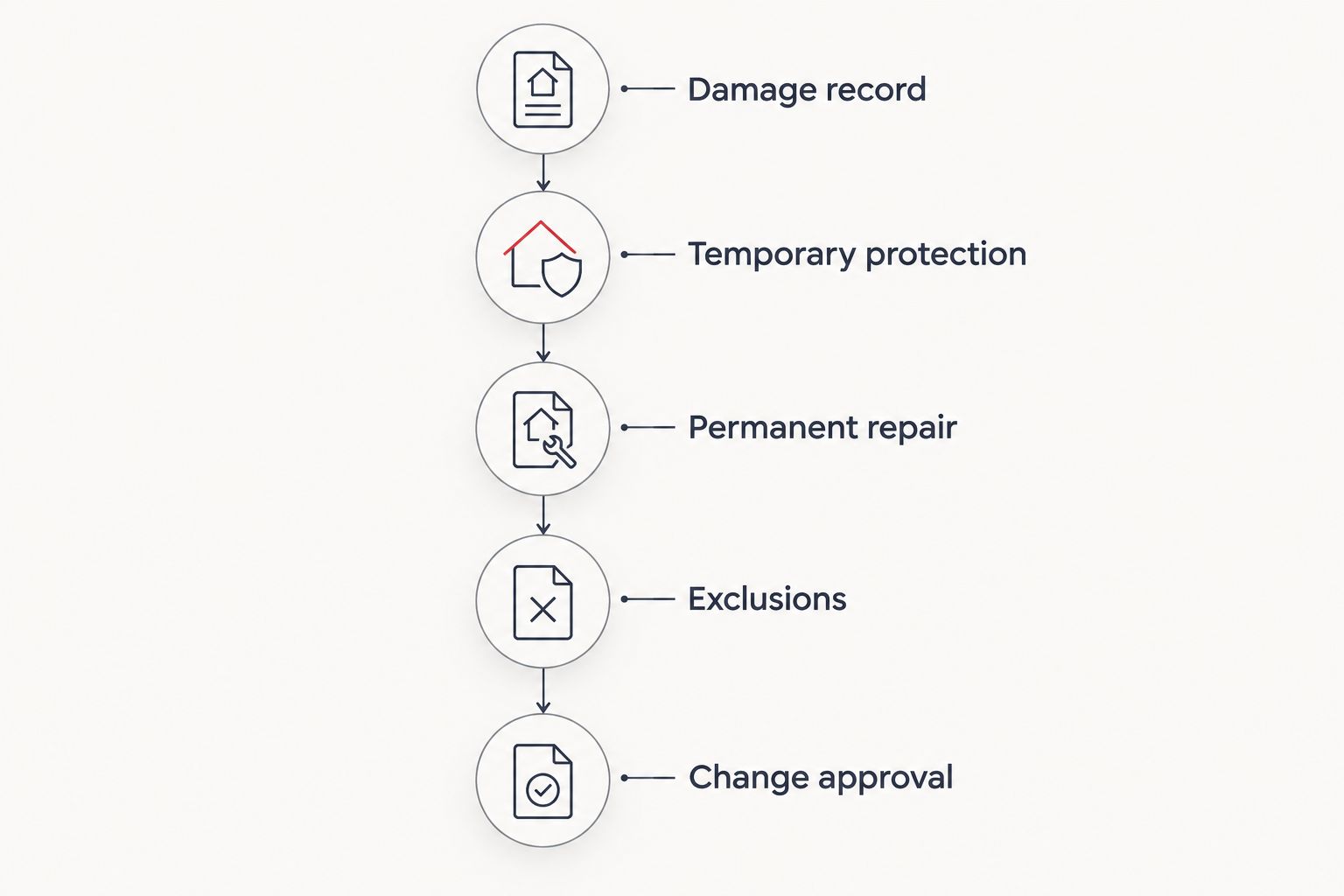
Ask for a document that lets you identify the starting scope, the exclusions and the point at which further approval is required. Follow this sequence before signing.
- Damage record: Request photographs or a written description of the affected area. The record should distinguish observed damage from conditions that remain concealed.
- Temporary protection: Identify any immediate covering or stabilization work and whether it is separate from the permanent repair.
- Permanent repair: Name the roof components being removed and replaced, including the flashing details relevant to the leak.
- Exclusions: State whether decking, framing, insulation, drywall, painting and other interior work are included or excluded.
- Change approval: Establish how additional damage will be documented and how you will authorize changes before the contractor proceeds.
Ask whether cleanup includes removed roofing, loose fasteners and temporary covering materials. Also confirm who protects the area below the work. These details belong in the written scope, not in an assumption that cleanup means everything associated with the incident.
Keep the estimate, approval messages and damage photographs together. That record helps distinguish the work you originally authorized from later changes.
Does an emergency roof repair include interior damage?
Interior restoration is included only when the agreement lists it. A roofing repair addresses the roof; wet insulation, stained drywall and damaged finishes require their own assessment and scope.
Tell the contractor where you see water indoors, but do not assume the point directly above the stain is the roof entry point. Water can travel along building materials before appearing inside. The inspection needs to trace the source rather than treat the stain as a complete diagnosis.
Separate roof work from interior restoration in your paperwork. That makes it clear which contractor is responsible for each task and prevents a finished roof repair from being mistaken for a fully restored building.
Will homeowners insurance cover emergency roof repair in Kentucky?
Insurance coverage depends on your policy, the cause of damage and the claim decision. A contractor's estimate describes proposed work; it does not determine what your insurer will cover.
For a 2026 claim, review your current policy and contact your insurer about documentation and temporary protection requirements. Photograph visible damage from a safe location, retain receipts and keep the repair scope available for review.
Ask the insurer how it wants additional damage documented if removal exposes more affected materials. Do not assume that approval of an initial scope automatically approves every later addition. Keep the contractor's change authorization separate from the insurer's coverage decision.
What should you do while waiting for a roof inspection?
Protect people first and document conditions only from safe locations. Do not climb onto a wet or storm-damaged roof to inspect it, install a tarp or obtain photographs.
- Move belongings away from an active leak when you can do so safely.
- Keep people away from sagging ceilings and visibly damaged areas.
- Avoid wet electrical equipment, fixtures and outlets; seek qualified help when water reaches electrical components.
- Photograph visible interior damage without entering an unsafe area.
- Tell the contractor whether water is still entering and whether a temporary covering is already present.
Describe what you can observe rather than naming a repair you have not confirmed. Reporting that water appears beside a chimney during rain gives the inspector useful information without assuming the flashing is the only cause.
How should you choose a Kentucky roofing contractor?
Choose a contractor who explains the proposed work, identifies exclusions and documents changes. Local service coverage, licensing and insurance matter, but they do not replace a clear repair agreement.
Ayres Construction & Remodeling is based in Bowling Green and serves Kentucky and southern Indiana. For a roofing project, use the contact page to request an estimate and confirm scheduling, site access and the work the contractor can assess.
Before authorizing a 2026 repair, ask who will perform the work and who approves changes. Request applicable licensing and insurance documentation, and get any warranty terms in writing rather than assuming a particular duration or coverage.
Request a roofing estimate
Describe the damage, property location and any temporary protection already in place.
FAQ
How do I get an emergency roof repair estimate in Kentucky?
Request an inspection and a written scope that separates temporary protection from permanent repair. Provide your property location, visible damage and whether water is still entering, then confirm scheduling directly with the contractor.
Is a roof tarp the same as a roof repair?
A roof tarp is temporary protection, not a completed permanent repair. Ask how the damaged roofing, flashing and underlying materials will be assessed and restored after the temporary covering is installed.
Can a small roof leak require more than a patch?
A small visible leak does not establish the extent of roof damage. Water can travel before appearing indoors, so the repair should follow an inspection of the entry point and affected materials.
Should I approve emergency roof work before contacting insurance?
Contact your insurer about its requirements while arranging safe temporary protection. Keep photographs, receipts and written authorizations, and do not treat a contractor's estimate as confirmation of insurance coverage.
What should I compare between roof repair estimates in 2026?
Compare the same repair boundaries, materials, temporary protection, exclusions and change-approval terms. An estimate that omits decking or interior restoration is not equivalent to one that includes those tasks.
Does Ayres Construction & Remodeling serve all nearby states?
Ayres Construction & Remodeling serves Kentucky and southern Indiana. Confirm service for your property location and the proposed roofing work when requesting an estimate.
Should I go onto the roof to photograph storm damage?
Do not climb onto a wet or storm-damaged roof to take photographs. Document visible conditions from a safe location and leave roof access to qualified professionals.
One last thing
Ask what happens after the temporary covering comes off. That question exposes a gap that an emergency-only scope can leave: someone still needs to inspect the underlying materials, approve the permanent repair and close out the work.
For your 2026 estimate, require a clear stopping point for each phase. You should know whether the signed agreement ends with temporary protection, a repaired roof or additional interior restoration before work begins.