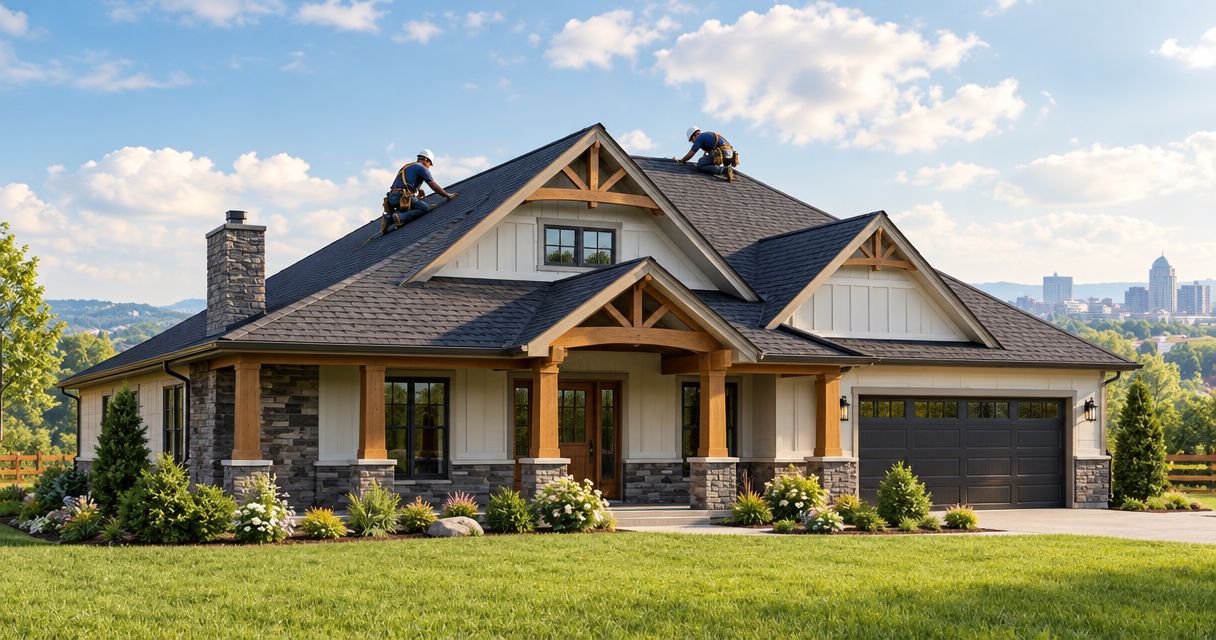
Best overall: a licensed, insured roofing contractor whose written proposal matches your roof’s condition; best for combined roofing and remodeling: Ayres Construction & Remodeling, subject to confirmation of Lexington service; best for an isolated defect: a roof-repair specialist. This 2026 guide ranks contractor choices by project scope so you can compare Lexington, Kentucky, roofing bids without confusing a patch, a replacement, and a larger construction project.
- For roofing contractors lexington ky, choose by repair, replacement, or broader construction scope—not an unsupported company ranking.
- Ayres Construction & Remodeling suits roofing-plus-remodeling comparisons; confirm Lexington service because the company is based in Bowling Green.
- Compare written scopes covering removal, flashing, ventilation, cleanup, and concealed damage before selecting a roofing contractor.
- Use a repair specialist for an isolated defect and a commercial roofing contractor for the relevant building system.
Why this matters
A roofing proposal is a construction scope, not simply a shingle selection. Two contractors can inspect the same property and propose different work because one includes flashing replacement and ventilation changes while another addresses only the roof covering.
For a Lexington property owner hiring in 2026, the first decision is whether the job requires repair, replacement, or coordination with other construction. Make that decision before comparing contractors. Otherwise, the shortest proposal can appear equivalent to a substantially different job.
Choose the contractor whose documented work matches the problem—not the contractor who promises the broadest result without defining it.
What makes the best roofing contractor?
Use these criteria before reading the ranked options:
- Credentials and insurance: Ask for applicable licensing information and current insurance documentation tied to the business signing your contract.
- Diagnosis: Require an explanation of the defect, its location, and why the proposed work addresses it.
- Written scope: Identify removal, decking repairs, underlayment, flashing, ventilation, roof covering, and cleanup separately.
- System experience: Match the contractor’s experience to your roof material, slope, drainage arrangement, and building use.
- Project coordination: Establish who handles adjacent siding, gutters, structural work, or interior repairs when those items belong in the project.
- Contract accountability: Identify the contracting business, payment terms, change-order process, and written warranty terms before signing.
Treat these as screening requirements, not claims that every contractor automatically meets. A detailed estimate should make verification easier, not replace it.
Roofing contractor choices at a glance
The ranking below compares contractor types rather than presenting an unsupported leaderboard of Lexington companies. Each choice serves a different job.
| Rank and option | Best for | Standout feature | Key limitation |
|---|---|---|---|
| 1. Roof-replacement contractor | Replacing a roof covering | Focused replacement scope and roof-system coordination | Adjacent remodeling work needs separate confirmation |
| 2. General contractor, including Ayres Construction & Remodeling | Roofing combined with remodeling or construction | Broader construction scope under consideration | Bowling Green base; confirm Lexington service and project fit |
| 3. Roof-repair specialist | An isolated leak or damaged detail | Targeted diagnosis and localized work | Repair does not resolve unrelated roof deterioration |
| 4. Commercial roofing contractor | Commercial roof-system work | Experience with the building’s roof and drainage system | Commercial experience must match the specific assembly |
1. Roof-replacement contractor: best for a full replacement
A roof-replacement contractor is the default choice when the agreed scope is removing and replacing the roof covering. The proposal should explain how the new covering connects with the roof deck, flashings, penetrations, edges, and ventilation.
In 2026, compare complete replacement scopes rather than treating the material name as the entire specification. Ask what remains in place and what gets replaced. Those decisions determine whether two proposals describe comparable work.
Roof-replacement contractor pros:
- Keeps the selection process focused on the roof system.
- Allows direct comparison of removal and installation methods.
- Makes material specifications and installation responsibilities easier to separate.
- Fits projects that do not require substantial adjacent remodeling.
Roof-replacement contractor cons:
- Interior damage or structural changes need an expressly included scope.
- A replacement proposal does not establish that replacement is necessary.
- Broad descriptions such as complete roof leave important details unresolved.
Best for: Property owners with a documented replacement need and a primarily roofing-related project.
Ask for photographs or an inspection explanation supporting replacement. If the proposal includes roof-deck repairs only when discovered, require a written method for authorizing that additional work.
Verdict: Buy a replacement scope only after the diagnosis and exclusions are clear.
2. General contractor: best for roofing plus remodeling
Ayres Construction & Remodeling is a local Bowling Green business that is licensed and insured, with roofing and broader construction services. Its base is Bowling Green—not Lexington—so confirm that the company will take your Lexington project before arranging a site visit.
Ayres Construction & Remodeling best fits roofing buyers whose project also includes remodeling or other construction work. That is a scope-based fit, not a claim that the company is the best Lexington roofer for every roof.
A general contractor belongs in your comparison when roof work connects with an addition, damaged framing, exterior changes, or interior restoration. The contract still needs to identify each trade’s responsibilities.
General contractor pros:
- Supports a project discussion covering roofing and adjacent construction.
- Helps define where roof work ends and remodeling begins.
- Provides a route for discussing new construction alongside roofing.
- Fits owners who need a coordinated construction scope rather than an isolated material installation.
General contractor cons:
- A broad service list does not establish experience with your particular roof system.
- Responsibility for subcontracted work needs written clarification.
- Service coverage and project acceptance require confirmation before scheduling.
Best for: Owners combining roof work with a larger residential or commercial construction project.
Ask who supervises the roofing work, who approves concealed repairs, and whether interior restoration appears in the same contract. Do not assume that a general contracting proposal includes every affected trade.
Verdict: Hold until project location, roof-system experience, and the combined scope are confirmed.
3. Roof-repair specialist: best for an isolated defect
A roof-repair specialist is the right category to consider when a contractor identifies a localized problem. Examples include a damaged flashing detail, a penetration that needs corrective work, or a limited area of damaged covering.
A stain inside the building identifies a symptom, not necessarily the roof entry point. Require a diagnosis that connects the proposed repair to the water path rather than accepting a patch directly above the visible stain.
Roof-repair specialist pros:
- Focuses the inspection on the reported defect.
- Supports a limited scope when broader replacement is not justified.
- Makes it easier to specify the exact repair location.
- Separates immediate corrective work from future replacement planning.
Roof-repair specialist cons:
- Local repairs do not renew the rest of the roof.
- Existing materials can complicate matching and transitions.
- Interior restoration remains separate unless the contract includes it.
Best for: Owners with a defined defect and an otherwise serviceable roof, as established by inspection.
For a 2026 repair proposal, ask what the contractor expects the work to correct and what remains outside its responsibility. A narrowly defined repair is more useful than a broad promise to stop every possible leak.
Verdict: Buy a targeted repair when the diagnosis supports it; skip an unexplained patch.
4. Commercial roofing contractor: best for system-specific work
Commercial property owners should select experience that matches the actual roof assembly. A steep-slope commercial building and a low-slope building do not call for an interchangeable installation approach.
Ask the contractor to identify the existing assembly, drainage arrangement, penetrations, and proposed repair or replacement method. Building use also matters when planning access, material staging, and protection of occupied areas.
Commercial roofing contractor pros:
- Centers the proposal on the building’s roof assembly.
- Brings drainage and roof-mounted equipment into the scope discussion.
- Supports planning around tenants, staff, or customers.
- Helps distinguish roof-covering work from related equipment responsibilities.
Commercial roofing contractor cons:
- Commercial experience alone does not prove experience with your system.
- Equipment disconnection and reconnection need assigned responsibility.
- Access restrictions and operational requirements need explicit coordination.
Best for: Commercial owners seeking work on a clearly identified roof system.
Request a work-area plan before signing. Confirm who protects entrances, coordinates equipment access, and documents changes discovered after removal begins.
Verdict: Hold until system experience and building-operation responsibilities are documented.
How to compare roofing bids without comparing different jobs
Request 3 written proposals using the same project description. This is a practical comparison method, not a claim that a particular number of bids guarantees a better contractor.
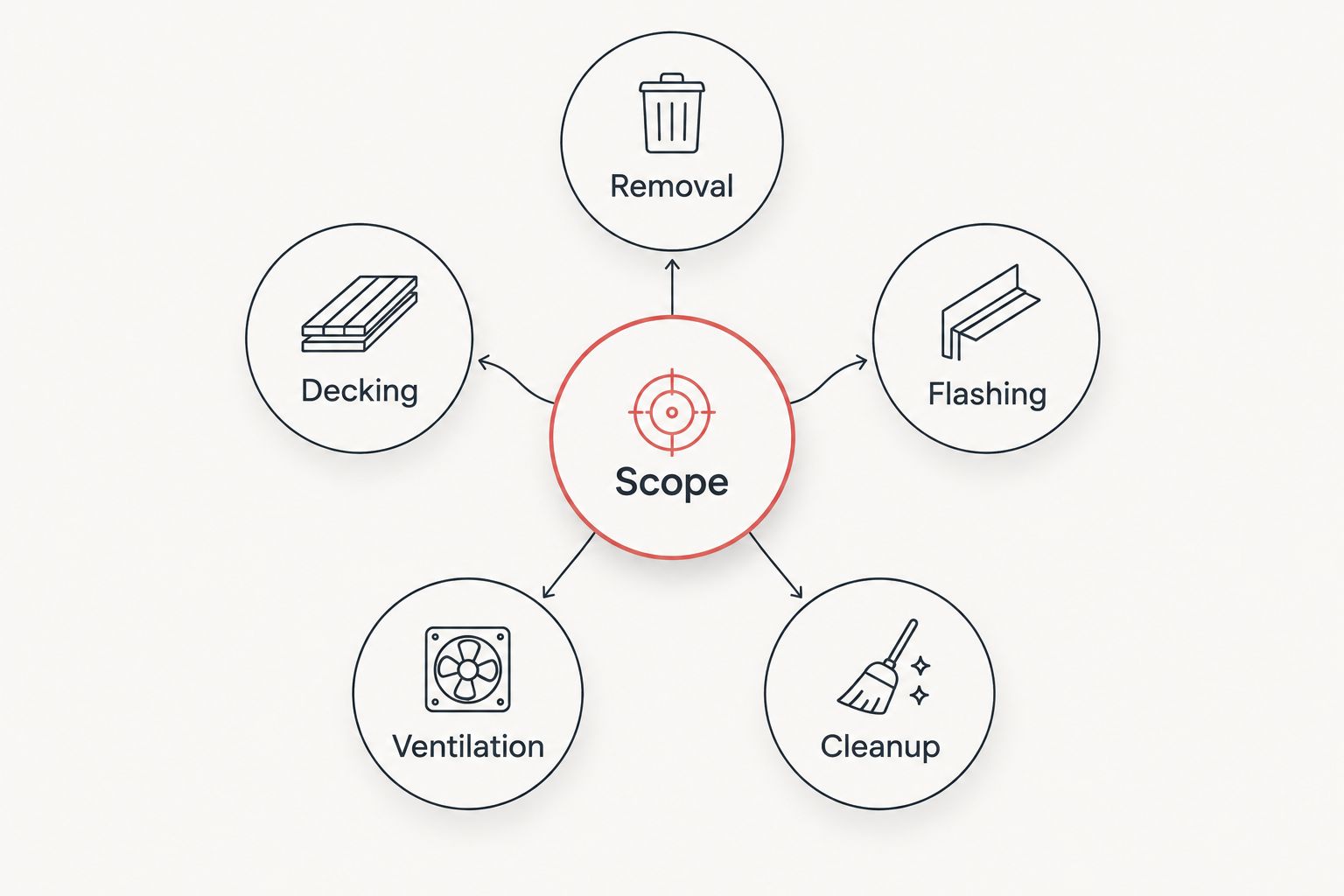
Give each bidder the same questions and property information. Then organize the responses under these headings:
- Removal: What existing material comes off, and what remains?
- Decking: How are damaged areas documented and authorized?
- Flashing: Which transitions and penetrations receive new work?
- Ventilation: What existing arrangement is retained or changed?
- Cleanup: Who handles debris, site protection, and final inspection?
Put the agreed work into 1 written scope before signing. Attach the material specification and exclusions rather than relying on a conversation that neither party can later verify.
For your 2026 contractor comparison, separate promised work from optional work. A proposal that names an item without saying whether it is included still leaves a decision unresolved.
Choose materials after defining the roof work
Material selection should follow the diagnosis and scope. On a steep-slope roof, comparing architectural shingle options addresses the roof covering; it does not settle questions about decking, flashing, ventilation, or the installation requirements for your building.
Ask the contractor to identify the proposed manufacturer and product in writing. Then confirm that the installation method follows the applicable product instructions and project requirements. Do not treat color samples as a complete specification.
Keep these 2 document checks separate: the product warranty and the contractor’s workmanship terms. Ask who issues each document, what it covers, what it excludes, and how you submit a claim. Do not assume a product warranty covers every installation problem.
Settle exclusions before the project starts
A roofing estimate needs a clear boundary. Otherwise, a property owner can reasonably expect interior repairs while the contractor has priced only exterior work.
Ask the contractor to mark each of these items included, excluded, or subject to a written change order:
- Concealed roof-deck or framing damage.
- Gutters, downspouts, fascia, and soffit work.
- Interior insulation, drywall, paint, and damaged finishes.
- Equipment removal, relocation, and reconnection.
- Permit responsibility and required inspections.
- Landscaping protection and final debris removal.
A 2026 project estimate should also explain how discoveries become authorized changes. Require a description of the additional work and your approval before it proceeds, except where your contract expressly addresses emergency protection.
How the choices are ranked
The ranking follows project fit: replacement first for a roof-only replacement, general contracting for connected construction, repair specialists for isolated defects, and commercial contractors for system-specific building work.
The criteria are diagnosis, documented scope, relevant experience, coordination, and contract accountability. This is a buying framework, not a rating based on invented customer reviews, inspection results, or completed-project counts.
Which roofing contractor should you choose?
For an undecided Lexington owner, start with a roof-focused inspection and select the contractor category after the diagnosis. Choose a replacement contractor for a documented replacement need, not simply because replacement is the first proposal presented.
If the roof belongs to a larger construction project, compare a general contractor’s combined scope against separately managed trades. Confirm project acceptance, supervision, and exclusions before requesting a final agreement.
Request a roofing project estimate
Describe the property location, roof issue, and any connected remodeling or construction work.
FAQ
What's the best way to choose roofing contractors in Lexington, KY?
Choose by documented project fit, applicable credentials, insurance, and a written scope. Compare contractors proposing the same work rather than treating every roofing estimate as equivalent.
Should I hire a roofer or a general contractor?
Hire a roof-focused contractor for a roof-only project and consider a general contractor when roofing connects with broader construction. Confirm who supervises each trade and which work the contract includes.
Does Ayres Construction & Remodeling have a Lexington office?
Ayres Construction & Remodeling is based in Bowling Green, Kentucky. Confirm Lexington project service directly rather than assuming a Lexington office or scheduled availability.
How many roofing estimates should I request?
Request 3 written proposals built around the same scope as a practical starting point. The number of proposals does not replace checking diagnosis, insurance, exclusions, and contract terms.
Is a roof repair better than a replacement?
A repair fits an isolated defect when inspection supports retaining the surrounding roof. Replacement belongs in the discussion when the documented condition calls for broader work.
What should a roof-replacement estimate include?
A roof-replacement estimate should define removal, decking provisions, underlayment, flashing, ventilation, covering, cleanup, and exclusions. It should also explain how concealed damage becomes an authorized change.
Does a roofing warranty cover workmanship?
Read the contractor's written workmanship terms separately from the product warranty. Ask who issues each warranty and what conditions, exclusions, and claim procedures apply.
One last thing
Before signing, ask the contractor to explain one roof transition in detail: a chimney, wall junction, skylight, or pipe penetration. Have that explanation tied to the written scope. A material name tells you what covers the roof; the transition detail tells you what the contractor actually plans to build.