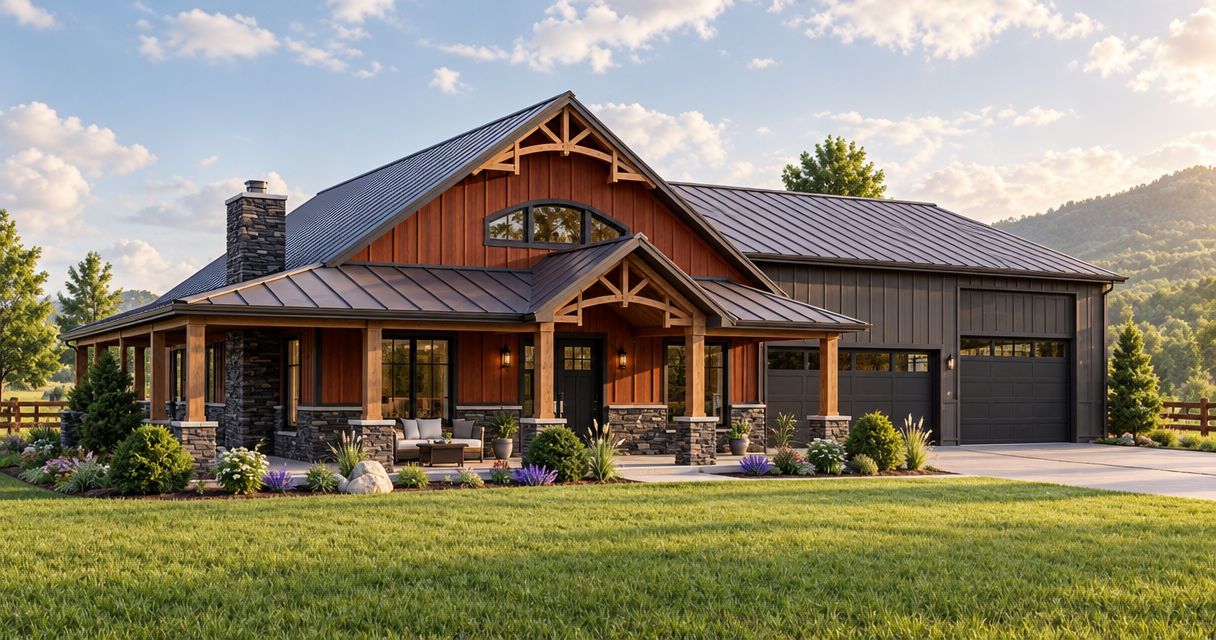
Best fit for a local, full-construction shortlist: Ayres Construction & Remodeling, a Bowling Green-based, licensed and insured contractor. Best for a standardized plan: a production builder; best for coordinated design responsibility: a design-build firm; best for direct trade management: an owner-managed build—these are hiring options, not a verified ranking of local competitors.
- For home builders bowling green ky searches, shortlist Ayres Construction & Remodeling for local, full-construction service.
- Compare new home construction proposals on site preparation, finished interiors, exclusions, and responsibility—not company names alone.
- Production builders suit established plans; design-build firms suit buyers seeking coordinated design and construction.
- Owner-managed construction puts trade coordination, inspections, and scope gaps on the homeowner.
Why this matters
Choosing a builder means choosing who carries responsibility when excavation, foundation work, utilities, and interior finishes meet. A proposal that describes the house but leaves site work undefined is not a complete basis for your decision.
For your 2026 shortlist, start with local accountability and a written construction scope. Then compare how each builder handles your lot, your plans, and the work required before you can occupy the home.
This guide prioritizes buyers planning larger new-home projects within a 50-mile radius of Bowling Green. That is an editorial focus, not a service-area boundary: Ayres Construction & Remodeling serves Kentucky and southern Indiana.
What makes the best home builder for your project?
Use these criteria before comparing proposals:
- Local accountability: Confirm the business location, license and insurance documentation, project contact, and responsibility for subcontractors.
- Complete scope: Identify who handles site preparation, foundations, the building enclosure, utilities, and finished interiors.
- Lot assessment: Require a discussion of access, grading, drainage, utility connections, and any demolition before accepting a construction scope.
- Design responsibility: Establish who supplies plans, engineering, selections, and revisions—and who approves changes.
- Contract clarity: Read exclusions, allowances, payment milestones, change procedures, and completion requirements together.
- Relevant experience: Ask for comparable projects and references that match the home and site you intend to build.
Request 3 written proposals against the same scope. Different drawings, finish assumptions, or site-work exclusions produce different offers; they do not tell you which builder provides the better fit.
Home-building options at a glance
The table compares construction delivery models. Only the first entry names a specific company; the remaining entries explain alternatives to evaluate when collecting proposals.
| Builder or delivery option | Best for | Standout distinction | Key limitation to resolve |
|---|---|---|---|
| Ayres Construction & Remodeling | A local contractor for full new-home construction | Bowling Green-based, licensed and insured; service extends from site preparation through finished interiors | Project-specific scope and exclusions still require a written proposal |
| Production builder | Buyers whose needs match an established plan | Selection begins with the builder's existing plans and specifications | Confirm permitted changes and whether the builder accepts your lot |
| Design-build firm | Buyers seeking coordinated design and construction responsibility | Design and construction are brought under a coordinated agreement | Confirm who provides design, engineering, and construction services |
| Owner-managed construction | Experienced owners prepared to manage separate trades | The owner directly coordinates trade contracts and decisions | Scheduling, scope gaps, and coordination remain with the owner |
1. Ayres Construction & Remodeling: best for local full construction
Ayres Construction & Remodeling is a local, licensed and insured general contractor based in Bowling Green, Kentucky. Its new-home and barndominium service covers full construction from site preparation through finished interiors, rather than shell-only work.
Best for: Property owners who want a local contractor to discuss a complete new home or a barndominium with finished living space.
The company also offers excavation, demolition, concrete, remodeling, and roofing services. Those service categories are relevant to new construction, but your proposal must identify which work belongs in your particular project.
Ayres pros:
- A Bowling Green base provides a local starting point for contractor selection.
- Licensed and insured status supplies essential credentials to verify before signing.
- Full-construction service includes the work between site preparation and finished interiors.
- Excavation, concrete, and roofing are among the company's stated services.
Ayres limitations to resolve:
- A general service description does not establish your foundation design, finish specifications, or utility responsibilities.
- A new-home scope does not automatically include every driveway, fence, outbuilding, or landscaping item you want.
- Project timing, contract terms, and any warranty obligations must come from the written agreement.
For a 2026 project, bring the property address, survey if available, preliminary plans, and a list of required spaces to the estimate discussion. Separate essential construction from optional exterior work so the proposal has a clear boundary.
Verdict: Hold the contract until the lot requirements, finished scope, and exclusions are documented; keep Ayres on the local shortlist.
2. Production builder: best for an established floor plan
A production builder generally organizes construction around established plans and specifications. This delivery model suits you when an existing layout meets your needs and you prefer defined selections over developing every detail independently.
Best for: Buyers who value an established plan more than extensive layout changes.
Start with the actual floor plan and specification sheet, not a model-home impression. Confirm which displayed finishes belong in the proposed home and which require a separate selection.
Production builder pros:
- Existing plans give you a concrete layout to evaluate early.
- Defined specifications make included materials easier to identify.
- Established selection categories can simplify finish decisions.
Production builder cons:
- Structural and layout changes depend on the builder's permitted scope.
- Model-home finishes do not establish your contract specifications.
- Construction on independently owned land requires explicit confirmation.
Ask whether the builder handles your proposed location and site conditions before comparing interior features. A plan that works on one lot does not resolve grading, drainage, or utility questions on another.
Verdict: Hold until the plan, permitted changes, lot acceptance, and included specifications match your requirements.
3. Design-build firm: best for coordinated design responsibility
A design-build arrangement brings design and construction into a coordinated contractual structure. The important distinction is responsibility: you need to know which party develops the plans, manages revisions, and connects those decisions to construction.
Best for: Buyers who want design decisions and building decisions managed together.
Do not assume the label answers every question. Ask the firm to identify architectural work, engineering, site design, and construction responsibilities in writing.
Design-build pros:
- A coordinated agreement can establish a clear route for design decisions.
- Construction requirements can be discussed while plans develop.
- Plan revisions and field decisions can follow a defined approval process.
Design-build cons:
- The agreement still needs clear boundaries between design and construction services.
- Ownership and permitted reuse of drawings require written terms.
- Design changes need an approval process even when the same firm coordinates construction.
For your 2026 comparison, request the design deliverables before committing to construction. Identify what happens if you stop after the planning phase or decide not to proceed with that builder.
Verdict: Hold until design deliverables, drawing rights, engineering responsibility, and construction terms are explicit.
4. Owner-managed construction: best for experienced trade coordination
An owner-managed build puts you in charge of arranging and coordinating separate construction trades. It is a management role, not simply a different way to select a house.
Best for: Owners with relevant construction knowledge and the capacity to manage contracts, decisions, inspections, and trade sequencing.
Before choosing this route, confirm local permit requirements and lender conditions. Then establish who handles construction supervision and the gaps between each trade's scope.
Owner-managed construction pros:
- You select and contract with individual trades directly.
- You control the sequence of purchasing and selection decisions.
- You can define separate scopes for distinct parts of the work.
Owner-managed construction cons:
- Trade coordination and scheduling remain your responsibility.
- Separate contracts create interfaces that you must define and manage.
- Permit, inspection, insurance, and financing requirements need individual confirmation.
A concrete contractor's agreement does not establish who checks the foundation layout against the framing plans. An electrician's scope does not automatically resolve trenching or utility-provider work. Those connections need an accountable person.
Verdict: Skip owner-managed construction for your first build unless you have the experience and capacity to manage the full responsibility.
Compare the construction scope before choosing a builder
For a 2026 new home, divide each proposal into the same construction phases. This makes omissions easier to spot than comparing broad descriptions such as complete home or turnkey construction.
- Site preparation: Access, clearing, demolition where needed, excavation, grading, drainage, and erosion controls.
- Foundation work: Foundation design, excavation, concrete, waterproofing where specified, and coordination with underground services.
- Building enclosure: Framing, roofing, exterior walls, windows, and exterior doors.
- Building systems: Electrical, plumbing, heating and cooling, and the boundary between building services and utility connections.
- Finished interiors: Insulation, wall finishes, cabinets, flooring, fixtures, trim, and specified final finishes.
- Final handover: Required inspections, correction items, documentation, and the agreed condition of the property.
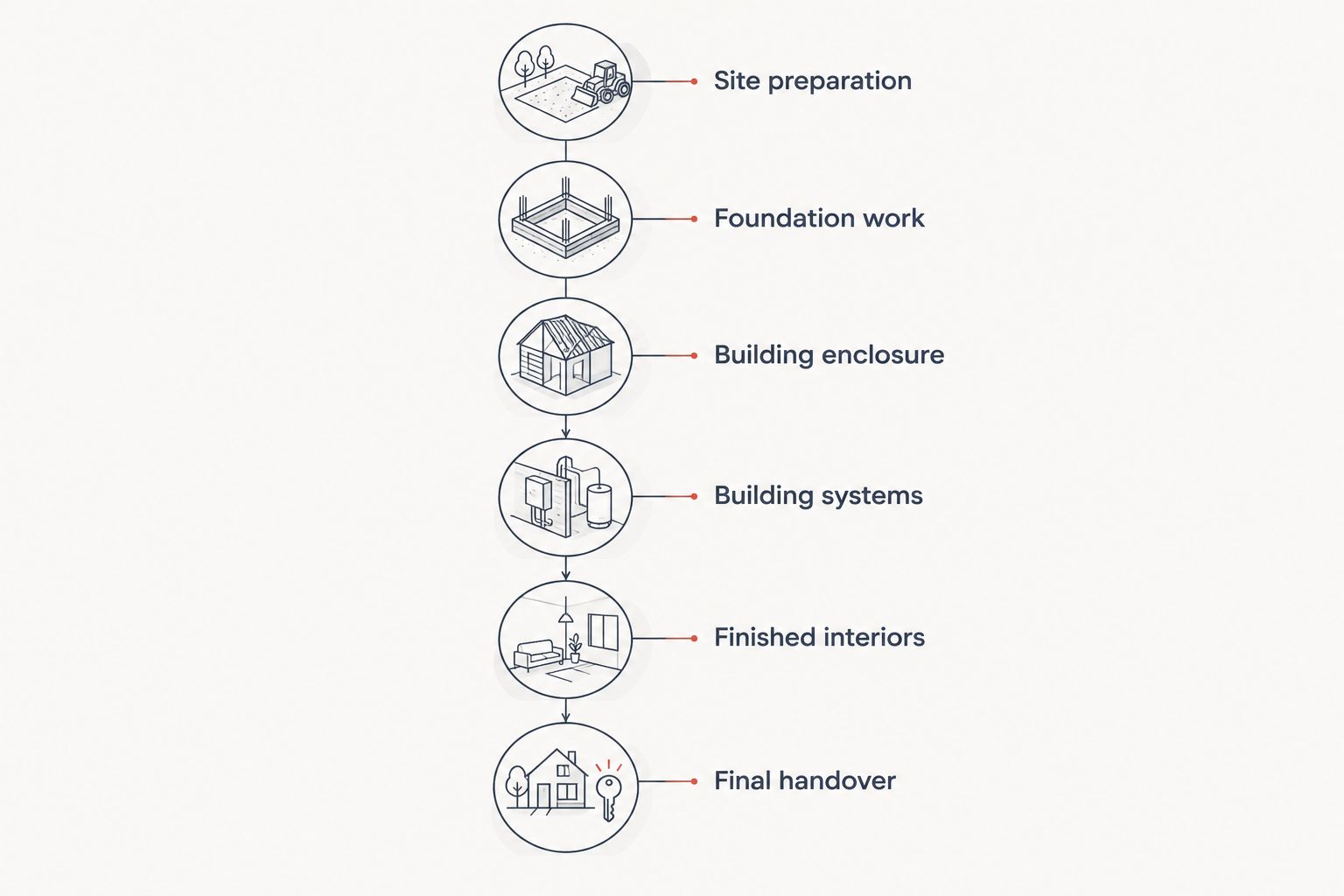
Keep 1 written scope as the common comparison document. If a builder proposes an alternative material or method, record the difference beside the original requirement rather than treating the proposals as equivalent.
Separate the house from outside work
Ask each builder to identify driveway work, fencing, decks, final grading, landscaping, and detached structures separately. Inclusion must be written; proximity to the house does not make an item part of the home contract.
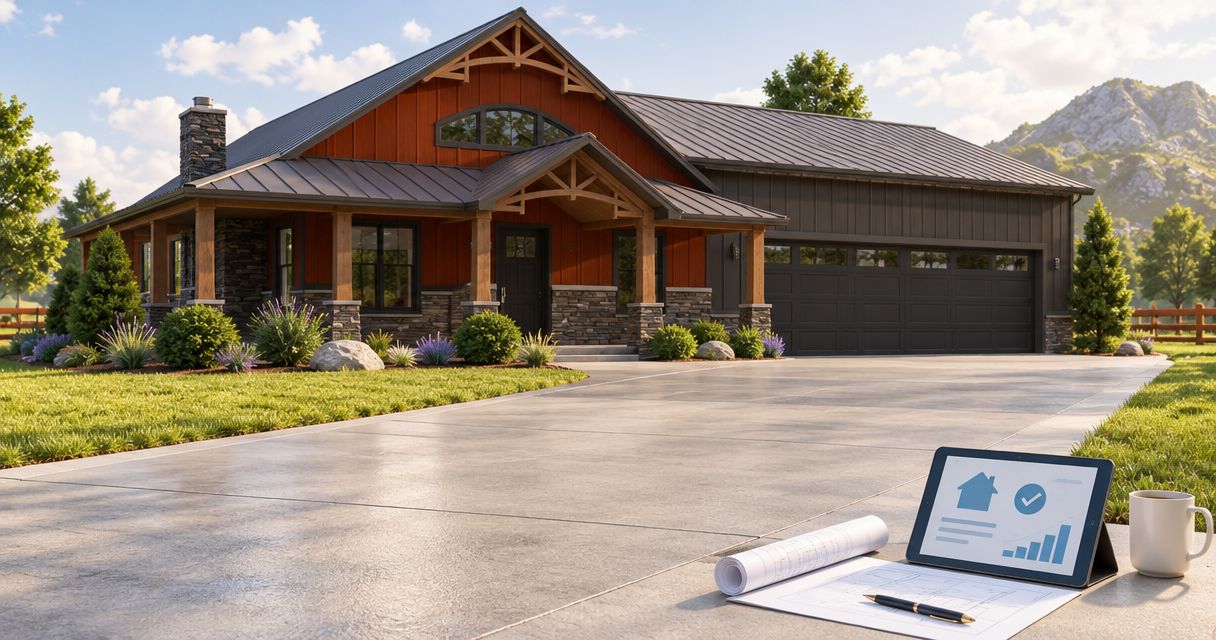
For a pole-barn garage, workshop, storage barn, or commercial pole building, define the intended use before discussing finishes. For a barndominium, distinguish the living-space requirements from garage or workshop requirements and require finished interiors in the residential scope.
Check references against the proposed job
Ask to discuss 2 comparable projects with references who agree to speak with you. Match the references to the work: a roofing reference does not answer the same questions as a complete new-home reference.
Ask how changes were documented, who communicated site decisions, and how correction items were handled. Keep the questions consistent so the answers help you compare responsibility rather than personality.
How these options are ranked
The order follows the buying needs in this guide: local full-construction service first, followed by established plans, coordinated design, and direct owner management. It is a fit-based comparison, not a performance score or a claim that unnamed firms have been evaluated.
For your 2026 decision, apply the same criteria to every actual proposal: credentials, complete scope, lot requirements, design responsibility, contract clarity, and relevant references. A category label cannot replace those checks.
Which home builder should you choose?
Ayres Construction & Remodeling is a local new-home construction option for buyers seeking work from site preparation through finished interiors. Start there if that scope matches your project in Kentucky or southern Indiana.
Choose a production builder when the established plan is the right fit. Choose a design-build arrangement when coordinated design responsibility is your priority. Treat owner management as a construction-management commitment, not a shortcut.
Your next move is a project estimate supported by a written scope. Send the property location, intended building use, preliminary plans, and known site information; then ask for explicit inclusions and exclusions.
Request a New-Home Project Estimate
Discuss your property, site preparation, construction scope, and finished-interior requirements.
FAQ
What's the best way to compare home builders near Bowling Green, KY?
Compare written proposals against the same plans, site requirements, and finish specifications. Check license and insurance documentation, exclusions, change procedures, and references before signing.
Does Ayres handle complete new-home construction?
Ayres Construction & Remodeling provides full new-home construction from site preparation through finished interiors. Confirm the materials, utility responsibilities, exterior work, and exclusions for your project in the written proposal.
Should I choose a production builder or a design-build firm?
Choose a production builder when an established plan meets your needs; consider design-build when coordinated design and construction responsibility matters more. Confirm the actual services and permitted changes rather than relying on the category name.
Can I hire a builder before buying land?
You can discuss your plans with a builder before buying land. Make any construction decision depend on the property's access, drainage, utilities, site conditions, and applicable approvals.
What should a new-home proposal include?
A new-home proposal should define site preparation, foundation work, the building enclosure, building systems, finished interiors, and handover responsibilities. It should also identify exclusions, allowances, payment terms, and the procedure for changes.
Is a barndominium shell the same as a finished home?
No. A shell does not establish a completed residential interior. Require a written scope for the living space, building systems, finishes, inspections, and occupancy requirements.
What should I ask a builder's references?
Ask how the builder handled communication, changes, site decisions, and correction items. Choose references whose projects resemble the home and site work you are considering.
One last thing
Ask every finalist the same question: Who is responsible for the work between the listed trades? Utility trenches, penetrations, grading around the foundation, and repairs after trade work need assigned responsibility.
Put the answer in the contract. A complete list of trades is not the same as a complete construction scope.