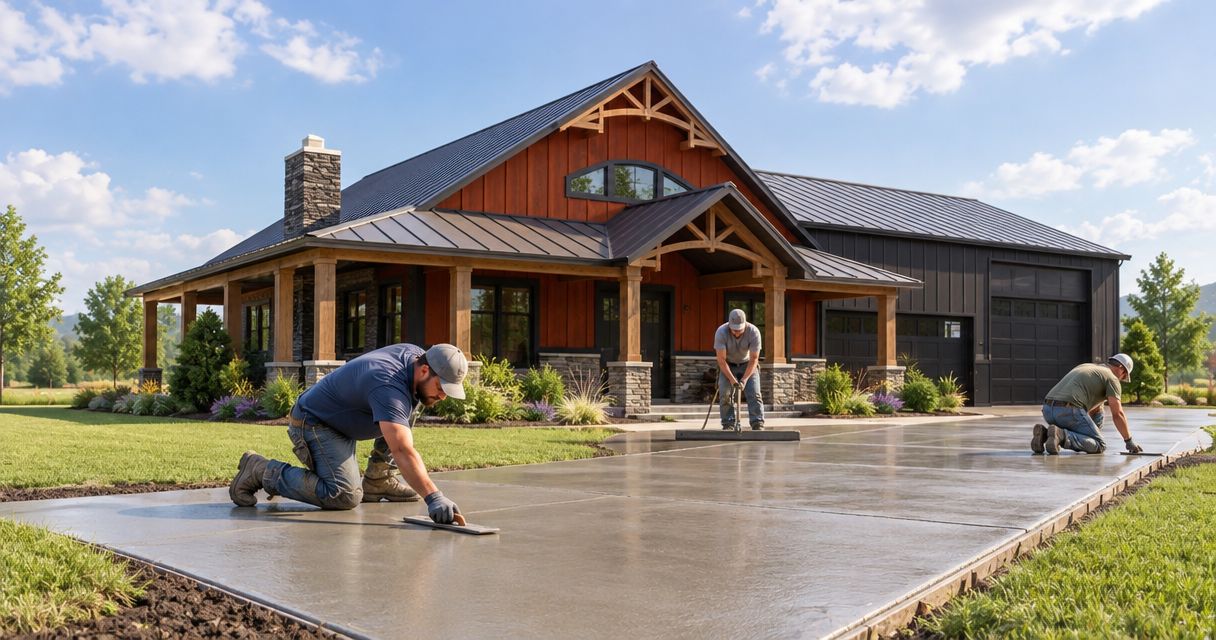
Best for coordinated site preparation and concrete work: Ayres Construction & Remodeling, a local, licensed and insured general contractor. For your 2026 concrete project in Bowling Green, compare that route with a concrete-only specialist for a defined pour or owner-managed subcontracting when you want to coordinate the work yourself.
- For concrete contractors bowling green ky, shortlist Ayres Construction & Remodeling when your project also needs excavation or construction coordination.
- Choose a concrete-only specialist for a clearly defined pour after confirming site preparation responsibilities.
- Owner-managed subcontracting suits experienced property owners who can coordinate separate scopes and schedules.
- Compare written preparation, reinforcement, drainage and curing requirements before selecting a contractor.
Why this matters
A concrete proposal covers more than the finished surface. Excavation, base preparation, drainage, reinforcement, joints and access all affect what you are buying. Two proposals describing the same driveway or slab can assign those responsibilities differently.
For a 2026 project around Bowling Green, start with the work that must happen before placement. A driveway replacement, workshop slab and foundation for a new home require different planning. Choose the contractor structure that matches the whole job, not just the concrete portion.
This guide ranks hiring routes by project fit. It does not treat an owner-managed project as interchangeable with a contractor responsible for excavation, concrete and subsequent construction.
What makes the best concrete contractor?
Use these criteria before comparing names or accepting a proposal:
- Project fit: Confirm whether the contractor is taking responsibility for a driveway, patio, building slab, foundation or a broader construction project.
- Written preparation scope: Identify who handles excavation, unsuitable material, base placement, compaction and access.
- Drainage planning: Require the proposal to address finished elevations and where surface water will go.
- Specified construction details: Establish the applicable concrete, reinforcement, joint and curing requirements before placement.
- Clear accountability: Name the party responsible for permits, inspections, scheduling, cleanup and correcting work that does not match the agreement.
- Documented credentials: Request current licensing and insurance documentation relevant to the work, plus references for comparable projects.
Treat missing scope as an unanswered question, not an included service. A detailed proposal gives you something to check during construction and a written basis for resolving disagreements afterward.
Concrete contractor options at a glance for 2026
| Rank and option | Best for | Standout distinction | Key limitation |
|---|---|---|---|
| 1. Ayres Construction & Remodeling | Concrete connected to excavation, remodeling or new construction | Local, licensed and insured general contractor offering concrete and related construction services | The project-specific proposal must establish exactly which tasks are included |
| 2. Concrete-only specialist | A defined driveway, patio or slab with clear boundaries | A narrowly specified concrete contract | Adjacent work needs an assigned contractor if excluded |
| 3. Owner-managed subcontracting | Experienced owners directing separate trades | You retain direct control over individual scopes | You also carry the coordination workload |
The second and third entries describe hiring arrangements, not named businesses. Use them to decide what type of proposal to request before comparing contractors.
1. Ayres Construction & Remodeling: best for coordinated concrete work
Ayres Construction & Remodeling is based in Bowling Green and offers concrete, excavation, demolition, remodeling and new construction. Its service area covers Kentucky and southern Indiana. The combination is relevant when concrete is one part of a larger property project rather than an isolated pour.
Ayres Construction & Remodeling is best for Bowling Green owners seeking concrete work alongside excavation or broader construction. For a new home or barndominium, its construction service extends from site preparation through finished interiors, not just the building shell.
Ask for a proposal that connects the concrete scope to the surrounding work. A workshop project, for example, needs decisions about building layout, openings, finished floor elevation and utility routes before concrete placement. Do not assume those decisions are included merely because several services appear under one contractor.
Ayres pros:
- Local, licensed and insured, with a Bowling Green base.
- Offers concrete alongside excavation and demolition.
- Provides new construction and remodeling services for projects extending beyond a slab.
- Serves residential and commercial property owners.
Ayres cons:
- A service list does not establish project-specific slab details or site preparation requirements.
- Responsibility for permits, design, testing and adjacent work still needs written confirmation.
- A concrete-only job still needs a clearly bounded proposal; broader services do not replace that requirement.
Best for: Property owners who need related construction tasks addressed together.
Verdict: Buy this hiring route when concrete and the surrounding construction need coordinated responsibility.
2. Concrete-only specialist: best for a defined replacement or pour
A concrete-only specialist is a hiring option when you can describe the work without leaving major construction decisions unresolved. Think of a driveway replacement with established boundaries or a patio whose location, drainage and access have already been planned.
The useful distinction is scope, not company size. Ask the specialist to state whether demolition, hauling, base preparation, forms, reinforcement, placement, finishing and curing are included. A narrow contract works only when its boundaries are explicit.
For building slabs, confirm who supplies the required construction details. A concrete installer should not have to infer the intended structural loads, building connections or utility layout from a sketch that omits them.
Concrete-only specialist pros:
- Gives you a focused scope to compare across written proposals.
- Fits work that does not require broader building coordination.
- Makes surface finish and placement details central to the discussion.
Concrete-only specialist cons:
- Excavation, drainage improvements or demolition need separate responsibility when excluded.
- A finished slab does not complete the surrounding building project.
- Unresolved design decisions prevent a clear comparison between proposals.
Ask for 2 comparable project references as a hiring checklist step. Discuss the type of work, preparation included and how the contractor handled questions after placement; do not treat unrelated decorative work as proof of foundation experience.
Best for: Owners with a defined concrete job and clear responsibility for adjacent tasks.
Verdict: Buy this hiring route when the pour is well specified and the surrounding work is already assigned.
3. Owner-managed subcontracting: best for experienced project owners
Owner-managed subcontracting means you arrange separate contractors for tasks such as demolition, excavation and concrete placement. It is a project-management choice, not a concrete product or a substitute for qualified trades.
This route gives you control over individual agreements. It also puts you at the center of decisions about readiness, access, inspections and handoffs. Before choosing it, identify who will check that the site is ready for the concrete crew.
The difficult questions sit between contracts. If the base elevation is wrong, who corrects it? If a required utility sleeve is missing, who stops placement? Your agreements need answers before the work reaches that point.
Owner-managed subcontracting pros:
- Lets you select separate contractors for distinct tasks.
- Keeps individual work packages visible in separate agreements.
- Gives experienced owners direct involvement in sequencing decisions.
Owner-managed subcontracting cons:
- You must coordinate schedules and confirm readiness between trades.
- Scope gaps remain yours to resolve unless responsibility is assigned.
- Changes affecting several contractors require updates across their agreements.
For a home, workshop or commercial building, distinguish construction management from occasional site visits. Someone must make timely decisions and communicate them to every affected trade.
Best for: Owners with construction-management experience and time to direct the work.
Verdict: Skip this route if you cannot actively manage trade handoffs and scope changes.
How the ranking works
The ranking prioritizes coordination, written scope and accountability. A general contractor is the default choice when concrete connects to excavation or a larger build; a concrete-only specialist fits a bounded pour; owner management fits an owner prepared to direct separate trades.
These are project-fit recommendations, not claims about comparative workmanship, customer ratings or completed jobs. Choose the route first, then evaluate the actual proposal and references.
What your concrete proposal needs to cover
Before you sign a 2026 agreement, put the following items into 1 written scope. Separate included work from exclusions so you can see where another contractor or an owner decision is required.
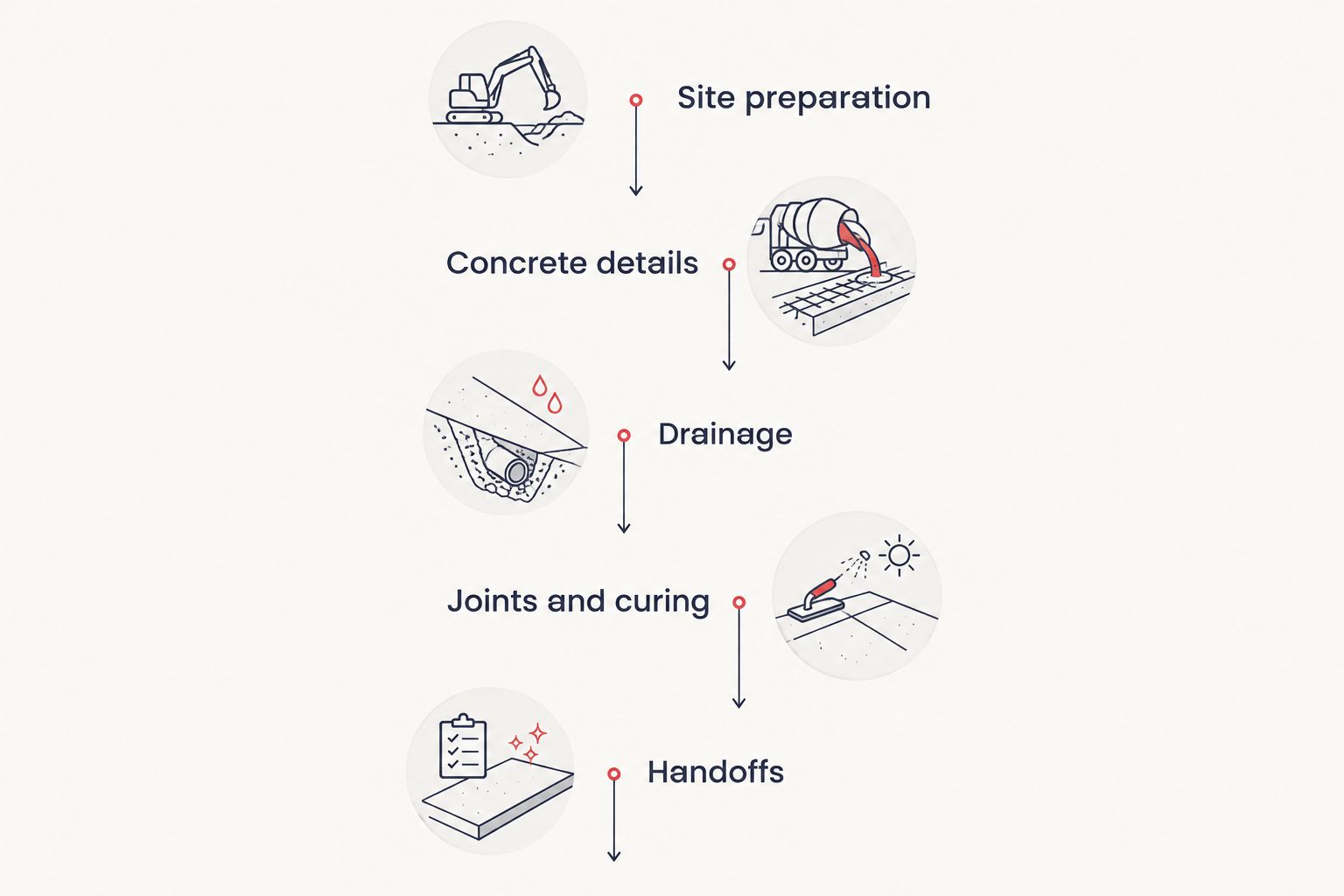
Site preparation
Identify demolition, disposal, excavation limits, base material and preparation responsibilities. Ask how unsuitable ground or concealed conditions will be handled if encountered. The agreement should explain the change-approval process rather than leaving additional work to a verbal conversation.
Concrete details
Document dimensions, intended use, finish, reinforcement and applicable design requirements. There is no single slab specification suitable for every driveway, workshop and building foundation. Obtain the details appropriate to your project instead of accepting a generic description.
Drainage
Establish finished elevations and the intended direction of surface runoff. Look at adjacent doors, existing pavement and nearby structures together. A surface that looks flat in isolation still has to function within the surrounding site.
Joints and curing
Ask how joints will be laid out and what curing method will be used. Also request instructions for protecting the new concrete and returning it to use. Follow project-specific instructions rather than assuming every placement follows the same timetable.
Handoffs
Name who handles permits and required inspections, who confirms readiness for placement, and who removes debris. For a building project, include coordination with utilities and the next construction phase.
A complete scope does not eliminate every site uncertainty. It establishes who makes decisions, how changes are approved and what the finished work must satisfy.
How to compare estimates without missing exclusions
Request 3 written proposals using the same project description. That is a comparison method, not a requirement to choose the middle proposal. Give each contractor the same drawings, intended use, access information and finish requirements.
Review the exclusions before comparing the totals. Look specifically for demolition, hauling, excavation, imported base material, utility work, engineering, permits, testing, drainage improvements and restoration of disturbed areas. Do not assume an omitted item is included.
Then ask each contractor to explain differences in the proposed work. If one agreement includes excavation and another starts at a prepared base, they describe different jobs. Resolve that difference before selecting a contractor.
For your 2026 planning, keep these decisions separate:
- Scope: What work does the agreement include?
- Responsibility: Who supplies information, approvals and adjacent work?
- Changes: How will additional work receive written authorization?
- Acceptance: What documents and instructions will you receive at handover?
Which concrete contractor route should you choose?
Choose Ayres Construction & Remodeling when your Bowling Green concrete project also involves excavation, remodeling or new construction. Start the estimate discussion with the complete project, including the work before and after the pour.
Choose a concrete-only specialist when the job boundaries and adjacent responsibilities are already settled. Choose owner-managed subcontracting only when you intend to manage the interfaces yourself. The right contract structure makes those responsibilities visible before construction starts.
Request a concrete project estimate
Describe the concrete work, site preparation and related construction your project needs.
FAQ
Who should I shortlist for concrete work in Bowling Green, KY?
Shortlist Ayres Construction & Remodeling when your concrete project also needs excavation or broader construction coordination. The company is local, licensed and insured; confirm the exact work in a written project proposal.
Is a general contractor better than a concrete-only contractor?
A general contractor is the better fit when concrete connects to several construction tasks. A concrete-only contractor fits a defined pour when responsibility for preparation and adjacent work is already clear.
What should a concrete estimate include?
A concrete estimate should define preparation, concrete specifications, drainage, joints, curing, cleanup and exclusions. It should also assign responsibility for permits, inspections and work supplied by others.
How many concrete proposals should I request?
Request 3 written proposals using the same project description. Compare the included work and exclusions before comparing totals.
Can one contractor handle excavation and concrete?
Yes, a contractor offering both services can address both in the project proposal. Confirm excavation limits, base preparation and concrete responsibilities rather than assuming the entire sequence is included.
What should I decide before pouring a workshop slab?
Decide the building layout, intended loads, openings, utility routes and finished floor elevation before placement. Have the applicable construction details established so the concrete work matches the planned building.
Should I manage separate concrete and excavation contractors myself?
Manage separate contractors yourself only if you can direct scheduling, readiness checks and trade handoffs. Otherwise, seek a contract that assigns coordination responsibility clearly.
One last thing
Before approving a 2026 concrete proposal, ask: Who confirms that everything below and through the slab is ready before placement starts? Get the answer in writing. Utility routes, preparation and construction details need attention while they are still accessible—not after the concrete covers them.