Choose Ayres Construction & Remodeling if you want a local, licensed and insured general contractor for a new home, pole building or other defined construction project; choose Thumbtack if you want a marketplace for finding and comparing independent service providers. In 2026, the distinction is straightforward: hiring a construction business is different from using a platform to find one.
- Ayres contracting vs Thumbtack compares a construction contractor with a service-provider marketplace, not two equivalent builders.
- Ayres Construction & Remodeling is best for buyers seeking a local general contractor in Kentucky or southern Indiana.
- Thumbtack is best for buyers who want to find and compare independent providers before choosing whom to hire.
- For new homes and barndominiums, compare finished construction scopes rather than a shell against a completed building.
Why this matters
A contractor comparison should tell you who will perform the work, what the agreement includes and who handles coordination. A marketplace comparison tells you how to find candidates. Confusing those decisions leaves the important questions unanswered.
For a 2026 project near Bowling Green, start with the building you need: a new home, pole-barn garage, workshop, storage barn, commercial pole building or barndominium with finished living space. Then decide whether you are ready to discuss construction with a contractor or still need to build a shortlist.
The Ayres Construction & Remodeling service area covers Kentucky and southern Indiana. For buyers planning larger projects within a 50-mile radius of Bowling Green, local contractor selection is the relevant starting point—not a nationwide platform comparison alone.
At a glance
| Dimension | Ayres Construction & Remodeling | Thumbtack |
|---|---|---|
| Best for | Buyers ready to discuss a defined construction project with a local contractor | Buyers gathering and comparing independent provider candidates |
| Standout distinction | Direct access to a construction business | A marketplace for discovering service providers |
| New homes and barndominiums | Full construction from site preparation through finished interiors | A way to find providers; each provider's construction scope needs verification |
| Provider comparison | Evaluate one contractor's fit, scope and proposal | Compare independent providers before selecting one |
| Coordination | Discuss general contracting responsibility directly | Establish coordination responsibility with the provider you hire |
| Credentials | Local, licensed and insured contractor | Verify credentials for the specific provider under consideration |
| Roofing and other trades | Roofing, concrete, remodeling, excavation and other stated services | Search for providers, then confirm their individual services |
| Pricing model | Request a project-specific construction proposal | Request provider-specific proposals; the platform name does not define your construction agreement |
| Written protections | Confirm scope, exclusions and obligations in the contract | Confirm scope, exclusions and obligations with the selected provider |
The direct contractor wins when you are ready to define construction
A direct contractor relationship is the better starting point when you already know what you want built. You can discuss excavation, concrete, framing, roofing and interior work as parts of the same project rather than treating provider discovery as the main task.
That suits a property owner planning a new home or a barndominium with finished living space. The stated service is full construction from site preparation through finished interiors, not shell-only work. You still need a written proposal defining what your particular project includes.
The limitation is choice: contacting one contractor does not give you a comparison of competing proposals. If you want alternatives, you must gather them separately and make their scopes comparable.
For your first discussion, bring the intended building use, property location and any plans already prepared. Ask which decisions must be settled before the contractor can describe the work accurately. A clear project brief is more useful than asking for a building price without a site or finish scope.
Thumbtack wins when your first task is finding candidates
Thumbtack is the better choice for building a shortlist of independent providers. Its role is discovery: helping you find businesses to consider before you decide whom to hire.
That makes sense when you have not chosen a contractor, want alternatives or need to identify providers for a particular trade. You can use a marketplace during the search stage without treating it as the company responsible for your eventual construction project.
The limitation is that finding a provider does not settle the scope of work. A business that handles a particular repair is not automatically a fit for a complete new home, commercial pole building or finished barndominium.
Ask every candidate the same questions about project type, service area and responsibility. For a larger build, establish whether the candidate is proposing general contracting, a building shell or an individual trade package. Those are different offers, even when they begin with similar descriptions.
Full-construction scope favors the direct contractor
A pole building comparison becomes useful only after you define the intended use. An unconditioned storage barn, a workshop and a barndominium with living space require different scope discussions.
For new homes and barndominiums, the direct construction offering includes site preparation through finished interiors. That is the relevant distinction for buyers who need a completed living space rather than an unfinished structure.
A marketplace search does not establish that scope by itself. A provider found there might propose complete construction or a narrower package; you must check the actual proposal instead of treating the search category as a contract.
Use these scope headings when reviewing proposals:
- Site preparation: clearing, excavation, grading and access requirements.
- Building shell: structural work, roofing, exterior openings and enclosure.
- Finished interiors: the interior work needed for the intended use.
- Utilities: connections and trade work included in the agreement.
- Exclusions: work, approvals or owner responsibilities outside the proposal.
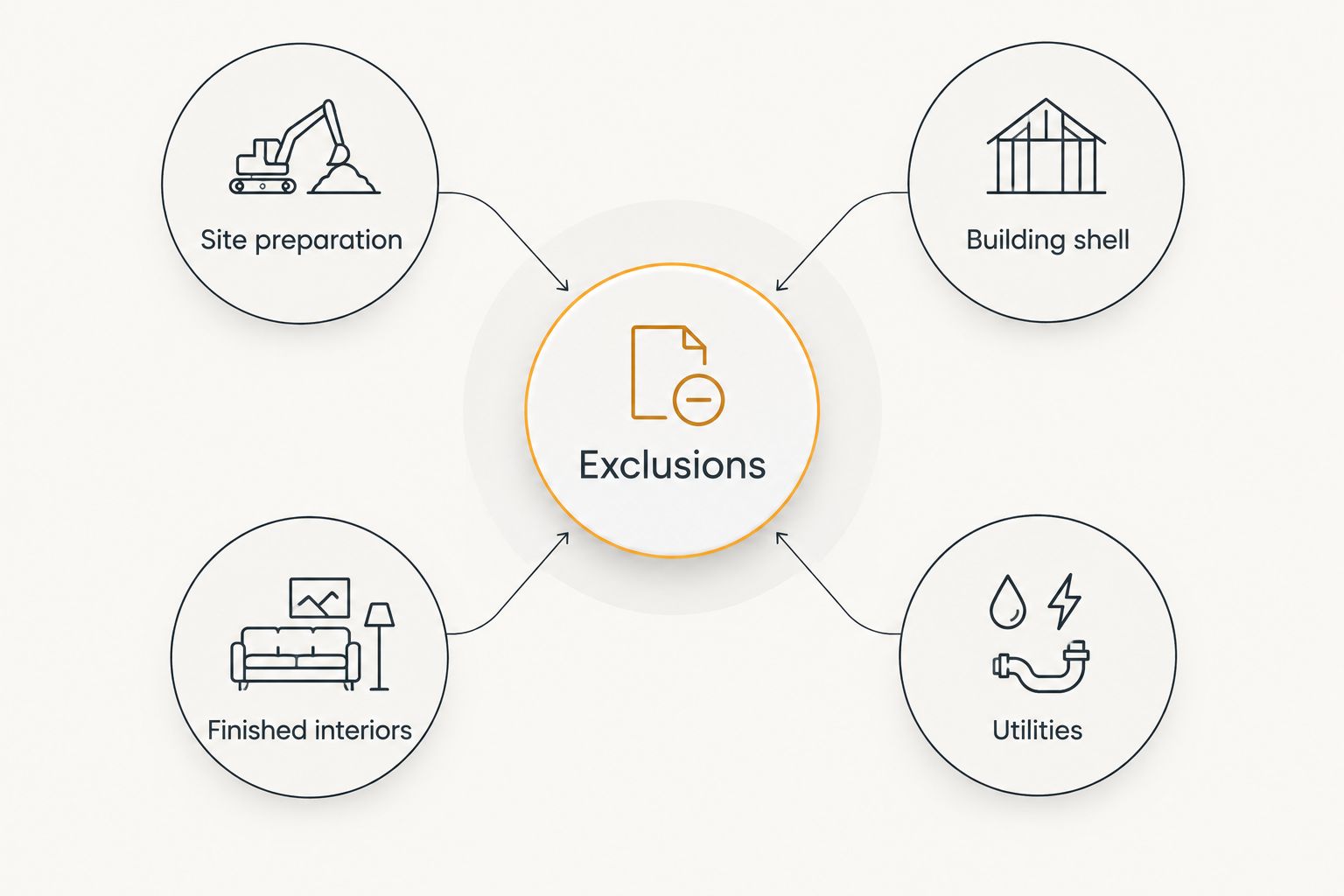
A shell proposal and a finished-building proposal are not competing offers for the same result. Resolve that mismatch before making a hiring decision.
Thumbtack wins on provider discovery, not construction accountability
A marketplace is useful when the question is who you should contact. A construction agreement must answer a different question: who is responsible for delivering the work you authorize?
For your 2026 shortlist, separate the search process from the hiring process. Finding a provider, reading a profile or exchanging messages does not replace agreement on the contracting business, scope, payment terms and responsibilities.
The marketplace advantage is access to alternatives. The tradeoff is that you must evaluate those alternatives individually; the platform name cannot tell you which candidate accepts responsibility for your entire build.
Before accepting any proposal, identify 1 primary contact for project questions and confirm that person's role in writing. This is a hiring recommendation, not a promise about how either option manages a project. You need to know where questions about excavation, concrete or interior work will go before construction begins.
The direct contractor offers a clearer starting point for local fit
Local fit is established here: the contractor is based in Bowling Green and serves Kentucky and southern Indiana. That gives you a defined geographic starting point when discussing a property in that service area.
A Thumbtack search still requires checking each provider's service area. Do not assume a business will take your project because it appears during a search or handles work somewhere nearby.
For larger new-home and pole-building projects, property access and site conditions belong in the initial conversation. Describe the location and intended use before spending time on finish selections or comparing proposal totals.
The limitation applies to both routes: service-area fit does not establish project acceptance, timing or site suitability. Ask directly about your property and proposed work. Neither a local address nor a marketplace profile answers those project-specific questions.
Both routes require credential and contract checks
Neither route removes your responsibility to review the business you hire. The direct contractor is identified as licensed and insured; request current documentation relevant to your project. When considering a marketplace provider, verify that provider's credentials individually.
For a 2026 hiring decision, request 3 documents before signing: the written scope, evidence of applicable credentials and insurance, and the proposed contract. Review the business names across those documents so you know which entity is accepting the work.
Read the contract for responsibilities rather than reassurance. Who handles permits? What is excluded? How are changes approved? What happens when concealed conditions require additional work?
This is an honest tie because contract quality depends on the actual agreement. Do not infer warranty terms, insurance coverage details or project protections from either a company description or the platform used to find a provider.
Roofing, concrete and fencing still need trade-specific scope
A focused trade project does not always need the same procurement approach as a complete building. Thumbtack is useful for discovering trade providers; direct contact is useful when a contractor's stated services match the work you need.
Roofing and concrete are among the direct contractor's stated services. For roofing, ask what removal, replacement, flashing and disposal work the proposal includes. For concrete, ask how the agreement addresses preparation, reinforcement, drainage and the intended use of the finished surface.
For fencing, confirm service fit with any candidate before requesting a detailed proposal. Do not assume fencing is included because a business offers general construction or exterior work.
There is no automatic winner for every trade job. Both routes require a precise work description, and neither a broad service category nor a short project label establishes materials or installation details. Choose the provider whose documented scope matches your property and intended result.
Pricing: compare construction proposals, not platform names
The useful pricing comparison is between written proposals for equivalent work. A marketplace is a route to providers, while a contractor prepares an offer for a defined project; those are different roles, not competing building-price models.
Ask each candidate how the proposed agreement handles payments, allowances, exclusions and changes. Do not assume the arrangement is fixed-price, cost-plus or otherwise until the actual proposal states it.
For predictability, specify materials and finishes before accepting a proposal. For flexibility, understand how later selections and changes will be documented and priced. Neither benefit comes automatically from hiring directly or searching through a marketplace.
Review 2 scopes side by side: the work included and the work excluded. Site preparation, utilities, approvals and interior completion deserve explicit answers rather than assumptions. A lower proposal total is not a better offer when it omits work you still need.
For a 2026 project estimate, provide the same plans and project description to every candidate. If you change the requested building or finish scope, update the comparison before choosing a contractor.
Final verdict: hire directly or build your shortlist
Choose Ayres Construction & Remodeling for a defined local build
Best for: property owners planning a new home, pole building or finished barndominium in Kentucky or southern Indiana. Choose direct contact when your next step is a construction scope discussion with a local, licensed and insured general contractor.
The strongest fit is a buyer ready to discuss the property, intended use and complete project responsibilities. The tradeoff is that you will need a separate search if you also want competing contractor proposals.
Choose Thumbtack to compare independent provider candidates
Best for: property owners who have not selected a contractor and want to build a shortlist. Choose the marketplace when discovery and comparison are your immediate tasks, particularly when you need to identify candidates for a defined service.
Its advantage ends where individual evaluation begins. Confirm each candidate's scope, credentials and willingness to take responsibility for the project you actually need—not merely the category you searched.
| Dimension | Winner |
|---|---|
| Ready-to-discuss construction project | Direct contractor |
| Independent provider discovery | Thumbtack |
| Stated full-construction scope | Direct contractor |
| Building a provider shortlist | Thumbtack |
| Established local service-area fit | Direct contractor |
| Credential and contract review | Tie: verify either route |
| Trade-specific scope | Tie: assess the proposal |
| Pricing structure | Tie: determined by the written agreement |
Request a project estimate
Discuss your location, building type, site preparation and finished construction scope.
FAQ
Is Ayres Construction & Remodeling better than Thumbtack?
Ayres Construction & Remodeling is the better fit when you want to discuss a defined project directly with a local general contractor. Thumbtack is the better fit when you want to find and compare independent providers before deciding whom to hire.
Is Thumbtack the company that will build my home?
Thumbtack is a service-provider marketplace, not the construction business you are comparing here. Establish the identity and responsibilities of the provider you hire in the written agreement.
Which option should I choose for a finished barndominium?
Start with a contractor offering full construction from site preparation through finished interiors. When comparing candidates, verify that each proposal includes finished living space rather than only a building shell.
How do I compare construction costs between these options?
Compare written provider proposals for the same scope, not the contractor name against the marketplace name. Check inclusions, exclusions, allowances, payment terms and how changes are handled.
Should I verify insurance when hiring through a marketplace?
Yes, verify the specific provider's applicable credentials and insurance before signing. A marketplace profile does not replace review of the business named in your contract.
Can I compare roofing or concrete contractors through either route?
Yes, you can contact a contractor offering those services directly or use a marketplace to identify candidates. Confirm the exact roofing or concrete scope with each business before comparing proposals.
What should I prepare before asking for a new-home estimate?
Prepare your property location, intended building use and any available plans. Also identify the finish scope and ask which site details the contractor needs before preparing a proposal.
One last thing
Before you sign, ask each candidate to mark everything on your plans that is not included in the proposal. Then ask who will supply or perform that missing work.
Exclusions turn a vague comparison into a useful hiring decision. The right next move is not choosing the more familiar name; it is choosing a qualified business whose written responsibilities match the building you intend to finish.